Upcycling is a smart way to reduce waste and extend the life of products. Instead of throwing items away, upcycling transforms them into something useful or even better, helping to cut down on pollution and save resources. It’s a key part of the circular economy, which aims to keep materials in use instead of following the “take-make-dispose” model.
Key Takeaways:
- What is the Circular Economy? A system where resources are reused and repurposed to minimize waste and resource depletion.
- How Upcycling Works: Turns discarded items into new products without the energy-intensive processes of recycling or manufacturing.
- Environmental Impact: Upcycling can reduce carbon emissions by up to 70% and save energy compared to creating new products.
- Consumer Role: Shopping secondhand, donating, and repurposing items can significantly reduce waste.
Upcycling isn’t just good for the planet – it also supports local economies, creates jobs, and strengthens communities. With simple steps like reusing old clothes or furniture, anyone can contribute to this system and make a difference.
The Problem: Waste and the Linear Economy
Our current economic system operates on a straightforward but flawed cycle: take, make, dispose. This linear model assumes resources are infinite and the environment can endlessly absorb waste. In reality, this approach depletes natural resources and harms ecosystems. From extraction to disposal, every stage of this cycle places immense pressure on the planet, setting the stage for a deeper understanding of how waste impacts the environment.
How Waste Harms the Environment
Landfills are a significant source of pollution, releasing methane gas – a greenhouse gas that’s 25 times more potent than carbon dioxide – contributing heavily to climate change. Consider the textile industry: in 2018, the United States generated over 35 million tons of textiles. Shockingly, only 15% of that was recycled or upcycled, leaving nearly 30 million tons to end up in landfills.
But the problem starts long before disposal. Manufacturing new products from raw materials demands massive amounts of energy, much of it sourced from fossil fuels, which drives up greenhouse gas emissions. Mining for these materials wreaks havoc on ecosystems, stripping away topsoil, polluting water supplies, and disrupting wildlife habitats. The energy-intensive processes of extraction, production, and transportation further strain the environment. Once discarded, this waste lingers, continuing to harm ecosystems for decades, if not longer. These challenges highlight the urgent need to rethink how we use and reuse resources.
How Consumer Habits Create More Waste
Consumer behavior plays a significant role in the waste crisis. Many of us shop without considering the hidden environmental costs of our purchases. Overconsumption and overproduction have been normalized, fueled by a mindset that prioritizes the new over the durable. Products are often designed to be replaced rather than repaired, and marketing reinforces the idea that newer is always better. As a result, functional items are frequently discarded long before their usefulness has ended, creating mountains of unnecessary waste.
This issue goes beyond individual choices. For example, buying a new shirt involves more than just the price tag – it carries the environmental cost of carbon emissions from manufacturing, water usage in production, and the eventual strain it will place on landfills. The linear economy makes new products appear cheaper than repairing or restoring old ones, but these prices fail to reflect the environmental toll of resource extraction, production, and disposal.
Marketing plays a pivotal role in sustaining this cycle. In industries ranging from fashion to electronics, furniture, and packaging, advertising encourages constant consumption, turning discarded items into both pollution and wasted resources.
The good news? Much of this waste is completely avoidable. Many discarded products still have years of life left in them – they just need someone to see their potential. This is where upcycling comes in, offering a way to extend the life of items and reduce waste. Shifting consumer habits toward repair, reuse, and upcycling is essential for breaking the cycle of waste and embracing more sustainable practices.
How Upcycling Solves Circular Economy Problems
Upcycling breathes new life into discarded items by turning them into useful, often eye-catching products. Instead of letting materials pile up in landfills, this approach keeps them in circulation, directly challenging the wasteful “take, make, dispose” model of the linear economy. By doing so, it addresses two major issues: excessive waste and the constant depletion of natural resources.
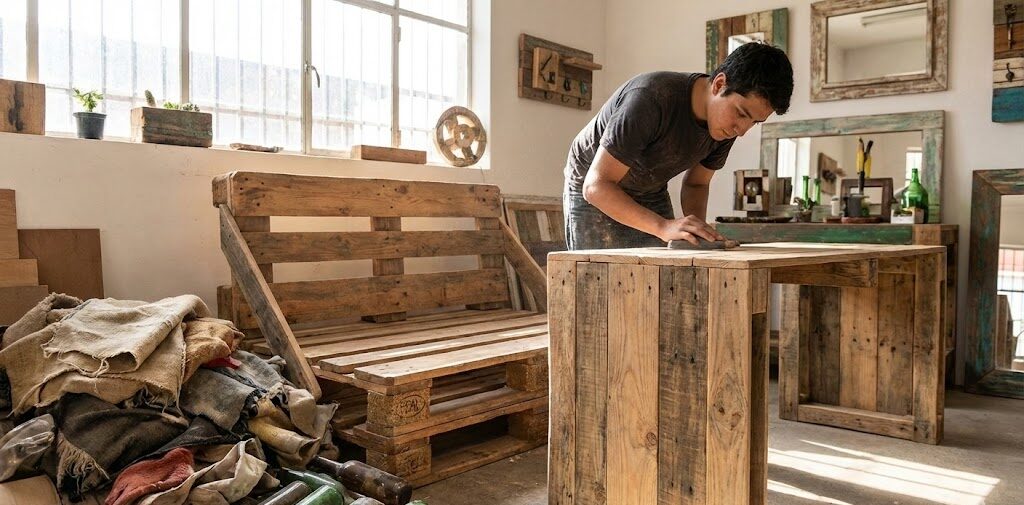
Repurposing items – like transforming wooden pallets into garden furniture or converting glass bottles into decorative lamps – reduces pollution while creating something functional. This approach has a significant environmental impact, especially considering that over 35 million tons of textiles were generated in the U.S. in 2018, yet only 15% were recycled or upcycled.
Here’s a closer look at how upcycling extends product life and reduces pollution.
Making Products Last Longer
Upcycling gives products a second life by reimagining their purpose. For instance, an old pair of jeans doesn’t have to end up in the trash – it can be turned into a durable handbag that lasts for years. This process keeps materials in circulation, aligning perfectly with the goals of a circular economy.
Many items are discarded not because they’re broken, but simply because they’re no longer wanted in their original form. Upcycling taps into the hidden potential of these items, giving them renewed value. Take furniture as an example: an outdated dresser can be transformed with some paint, new hardware, and a little creativity into a chic bathroom vanity. This not only preserves the craftsmanship and materials of the original piece but also eliminates the need to cut down more trees to produce new furniture.
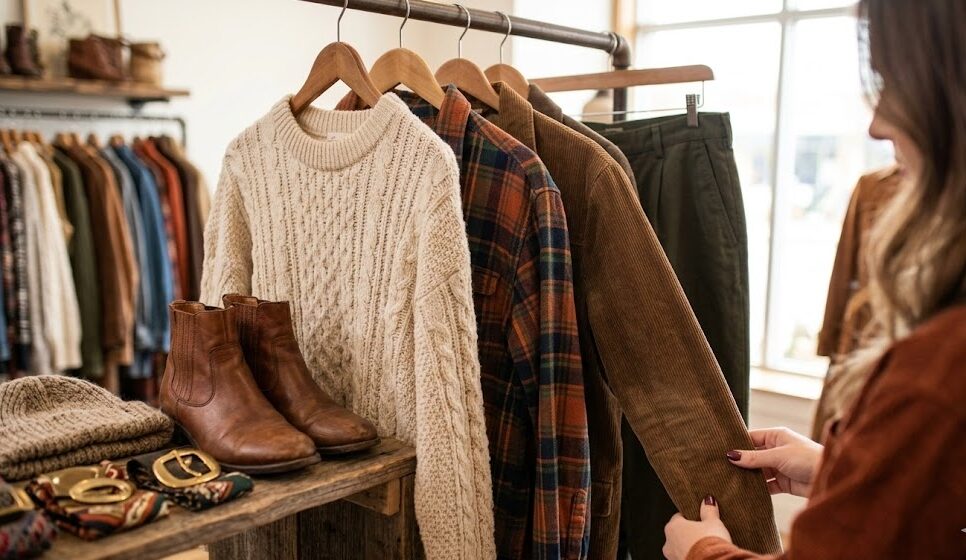
Thrift stores play a big role in supporting upcycling. Stores like Red Racks Thrift Stores in Missouri accept donations of clothes, toys, and household items, offering a treasure trove of possibilities for upcycling enthusiasts. Even better, when these stores recycle unsold items instead of sending them to the landfill, they contribute to the circular economy at a local level.
Cutting Down on Pollution
Upcycling isn’t just about extending the life of products – it’s also a powerful way to reduce pollution. Unlike traditional recycling, which often involves breaking materials down to their base components (a process that uses a lot of energy), upcycling works with items in their existing form. This creative transformation requires far less energy.
This energy savings translates into fewer greenhouse gas emissions. Manufacturing new products from raw materials involves energy-intensive steps like extraction, processing, and transportation, all of which rely heavily on fossil fuels. Upcycling skips most of these steps, resulting in a much smaller carbon footprint for the final product.
The environmental benefits don’t stop there. Mining and logging to extract raw materials often lead to habitat destruction, water contamination, and soil erosion. By reducing the demand for these materials, upcycling helps protect ecosystems and wildlife habitats.
Water pollution also decreases with upcycling. Industrial manufacturing processes often release harmful chemicals into waterways, but upcycling typically involves simpler methods like sewing, painting, or assembling. This means cleaner air and water for communities, particularly those near industrial facilities.
The potential impact of upcycling on pollution is enormous. Imagine if more of the 35 million tons of textiles generated annually in the U.S. were upcycled instead of discarded. The reduction in landfill waste, greenhouse gas emissions, and toxic pollutants would be significant. Every upcycled item represents a step toward less manufacturing, fewer resources extracted, and cleaner environments for everyone.
Benefits of Upcycling for the Environment and Communities
Upcycling has far-reaching effects that go well beyond individual DIY projects. When entire communities embrace this practice, the benefits ripple across both environmental and economic spheres, strengthening ecosystems and local economies alike. It’s a powerful way to contribute to a circular economy while addressing pressing environmental challenges.
How Upcycling Helps the Environment
Upcycling has a direct and lasting impact on the environment. By keeping materials out of landfills, it addresses one of the biggest waste issues in the U.S. and offers a meaningful way to reduce environmental strain.
One of the key environmental benefits is resource conservation. Upcycling reduces the demand for virgin materials like metals, wood, and oil, which are often extracted through mining, logging, and drilling processes that can harm habitats and contaminate water supplies.
Additionally, upcycling skips the energy-intensive steps involved in traditional manufacturing, which means fewer greenhouse gas emissions and a smaller carbon footprint for consumer goods.
Another major advantage is the reduction of pollution. Conventional manufacturing often releases harmful chemicals into the air and water. In contrast, upcycling typically involves simpler techniques – like painting, sewing, or assembling – that produce minimal waste and pollution. This helps protect air and water quality, making upcycling a practical way to support a healthier environment.
While the environmental benefits are significant, upcycling also brings notable economic and social advantages.
How Upcycling Helps Communities and the Economy
Upcycling doesn’t just help the planet – it also strengthens communities and drives local economies. By turning discarded items into valuable products, upcycling fuels entrepreneurship and creates opportunities for small businesses to thrive.
It also generates jobs across various roles, including collection, sorting, design, and craftsmanship, ensuring that money stays within local economies. This economic boost is especially important for neighborhoods looking to become more self-reliant.
Organizations like Red Racks Thrift Stores exemplify how upcycling can support community missions. Since 1958, this veteran-owned chain has operated 12 locations in Missouri, focusing on recycling unsold items instead of sending them to landfills. Their efforts benefit the environment, provide affordable shopping options, create local jobs, and support Disabled American Veterans.
“We serve the environment, our local community and Disabled American Veterans.” – Red Racks Thrift Stores
The demand for upcycled goods is also on the rise. The global textile recycling market, for instance, was valued at $6.9 billion in 2022 and is expected to grow to $9.4 billion by 2027, with an annual growth rate of 6.4%. This growing interest reflects a shift toward more sustainable consumer habits.
Upcycling also brings people together. Community workshops, skill-sharing events, and collaborative projects encourage neighbors to connect over shared environmental goals. These activities not only foster social bonds but also teach practical skills that help participants save money and reduce waste.
For many, upcycled products offer an affordable alternative to buying new, making sustainable living more accessible. Community-based upcycling projects can also provide vital opportunities for marginalized groups, offering skill-building, income generation, and a sense of inclusion.
All of these factors combine to create stronger, more resilient communities. When local businesses thrive, and residents have access to affordable, eco-friendly goods, the entire community benefits. This fosters long-term economic stability and promotes a culture of environmental responsibility, ensuring that resources and funds stay local and continue to circulate within the community.
Simple Ways to Start Upcycling
Upcycling offers a creative way to reduce waste while giving old items a new life. With over 35 million tons of textiles discarded in the U.S. in 2018 – and only 15% recycled – even small efforts can make a real difference. Ready to get started? Here are some practical tips to begin your upcycling journey.
Finding Items at Thrift Stores
Thrift stores are goldmines for upcyclers, filled with affordable materials just waiting for a second chance. Take Red Racks Thrift Stores, for example. Operating 12 locations across Missouri since 1958, this veteran-owned organization not only supports Disabled American Veterans but also creates local jobs and funds charitable causes. Shopping here – or at any local thrift store – lets you contribute to your community while stocking up on supplies for your projects.
When selecting items, focus on durability. Real wood furniture holds up well to sanding, painting, and hardware swaps. Glass jars, ceramic dishes, and metal containers are easy to clean or customize. A chair with tattered upholstery might have a solid frame perfect for reupholstering, and a scratched wooden dresser can be refreshed with some sanding and paint.
The clothing section is another treasure trove. Heavy fabrics like denim, wool, and cotton can be turned into bags, quilts, or household items. Even damaged clothes can yield reusable parts like buttons or zippers.
Easy Upcycling Project Ideas
Starting small is key to building confidence and skills. Here are a few beginner-friendly projects:
- T-Shirt Tote Bags: Transform an old t-shirt into a reusable shopping bag. Cut off the sleeves and neckline, then tie the bottom hem – no sewing required! It’s a quick, functional project.
- Glass Jar Storage Containers: Repurpose Mason jars or pasta sauce jars by painting them, wrapping them with twine, or adding fabric accents. Chalkboard paint on the lids turns them into handy pantry organizers.
- Furniture Makeovers: Breathe new life into a wooden chair or table. Start by sanding the surface lightly, then apply primer and two coats of paint. Add patterns with stencils or painter’s tape for a personal touch.
Once you’ve tackled these projects, you’ll be ready to take on more ambitious ideas – and help strengthen the circular economy in the process.
Supporting the Circular Economy in Your Area
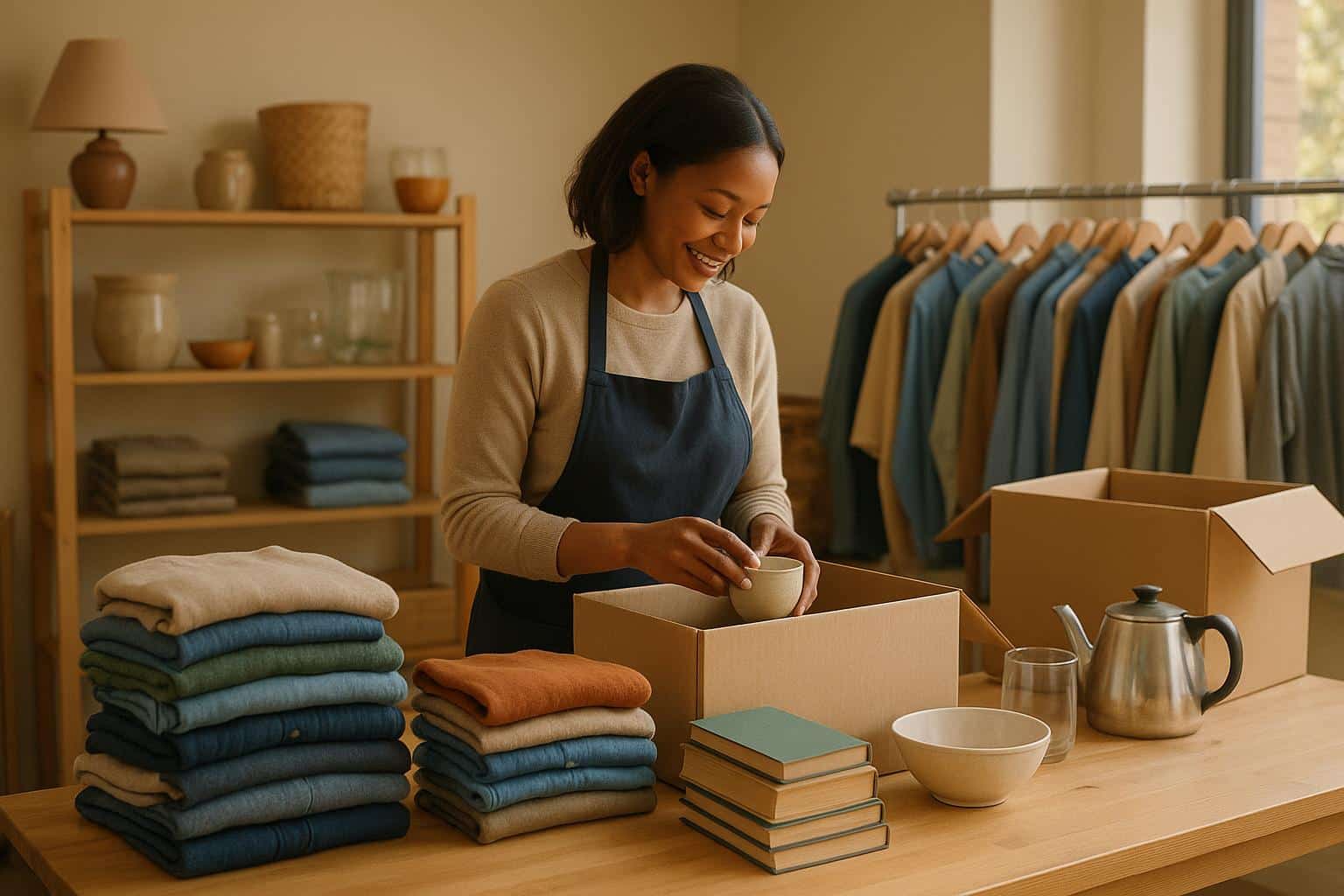
Upcycling isn’t just about crafting; it’s about contributing to a larger effort to reduce waste and keep materials in circulation. Donating items you no longer need is a great way to support fellow upcyclers and prevent usable materials from ending up in landfills. Organizations like Red Racks Thrift Stores accept donations of clothes, toys, and more, giving these items a second life.
Make secondhand shopping your go-to before buying new. This habit not only reduces demand for new materials but also supports local businesses. With 66% of global consumers willing to pay more for sustainable products, your choices align with a growing trend toward environmental responsibility.
Look out for community workshops and repair cafes in your area. These events provide tools, guidance, and a chance to connect with neighbors who share your passion for sustainability. They’re also a great way to learn advanced skills for more complex upcycling projects.
Sharing your creations – whether through social media or local groups – can inspire others to join the movement. Post before-and-after photos of your projects to show what’s possible, and you might just spark a chain reaction of creativity.
Finally, consider advocating for policies that promote reuse and waste reduction. Whether it’s supporting producer responsibility laws or encouraging local businesses to embrace circular practices, every step helps build a more sustainable future.
How Upcycling Builds a Better Future
Upcycling offers a smart way to turn waste into something valuable, benefiting both the economy and the planet. By giving products and materials a second life and transforming waste into higher-quality goods, it supports the circular economy’s mission of keeping resources in use rather than discarding them.
The numbers speak for themselves. The upcycling market is expected to hit $56.8 billion by 2027, and 66% of global consumers are willing to spend more on sustainable products. These stats highlight the potential for both environmental progress and economic growth through upcycling.
Beyond cutting down on waste, upcycling helps save energy, reduce emissions, and conserve natural resources. Each upcycled item means less material heading to landfills and less strain on our ecosystems.
The benefits don’t stop there. Upcycling also boosts local economies and communities. It creates jobs in design, craftsmanship, and small businesses while lowering production costs and opening up new revenue opportunities. Community-based projects and workshops not only build skills but also strengthen relationships and raise awareness about environmental issues, helping to create more resilient communities.
Organizations like Red Racks Thrift Stores show how collective efforts can make a big difference. This veteran-owned business keeps donated items in circulation, supports Disabled American Veterans, and provides local jobs. It’s a perfect example of how environmental, economic, and social benefits can come together to advance the circular economy.
Everyone has a role to play. Whether you’re upcycling at home, donating to thrift stores, or choosing upcycled products, every action makes a difference. These small steps don’t just reduce waste – they help build a stronger, more sustainable future.
Upcycling challenges us to rethink how we see waste and resources. By embracing the circular economy principles, every project, purchase, and donation brings us closer to a world where materials are continuously reused, and caring for the planet becomes second nature.
FAQs
What’s the difference between upcycling and recycling when it comes to helping the environment?
Upcycling and recycling both aim to minimize waste, but they take different approaches to achieve this goal. Recycling involves breaking materials down into their basic components to create new products. This often requires energy-intensive processes. For example, plastic bottles are melted down and reformed into other plastic items.
Upcycling, in contrast, breathes new life into items by repurposing them creatively, without breaking them down. This approach uses fewer resources and less energy, making it a more resource-conscious option. Imagine transforming an old dresser into one-of-a-kind shelving or sewing thrifted fabrics into fresh, stylish clothing – these are classic examples of upcycling.
When you choose to upcycle, you’re not just keeping items out of landfills – you’re also contributing to the circular economy, where resources are reused and extended in value. Places like Red Racks Thrift Stores offer an affordable treasure trove for upcycling projects, allowing you to reduce waste while supporting local communities.
How can I start incorporating upcycling into my everyday life?
Upcycling offers a fun and practical way to cut down on waste while embracing a more eco-friendly lifestyle. It’s all about breathing new life into things you already have. For example, you can turn worn-out clothes into reusable shopping bags, use glass jars as stylish storage containers, or refresh old furniture with a splash of paint. Plus, thrift stores like Red Racks Thrift Stores are treasure troves for finding items to upcycle, all while helping out your local community.
The benefits of upcycling go beyond just reducing waste. It helps you save money and lets you add a personal, creative touch to your belongings. Small changes like these can have a meaningful impact on the environment!
How does upcycling help local communities and boost the economy?
Upcycling has a powerful way of bringing communities together while boosting local economies. It reduces waste and breathes new life into items that might otherwise be discarded. Shopping at thrift stores like Red Racks isn’t just about finding great deals – it’s about making a difference.
At Red Racks Thrift Stores, unsold items are recycled, affordable shopping options are made accessible, and jobs with growth opportunities are created. These initiatives don’t just help the environment; they also support Disabled American Veterans and the local community, creating a ripple effect of positive change for both people and the planet.