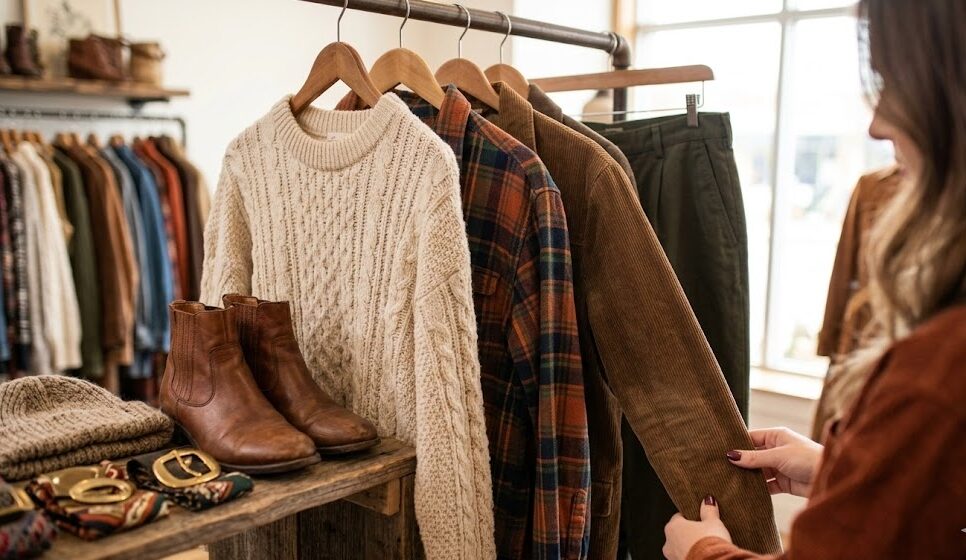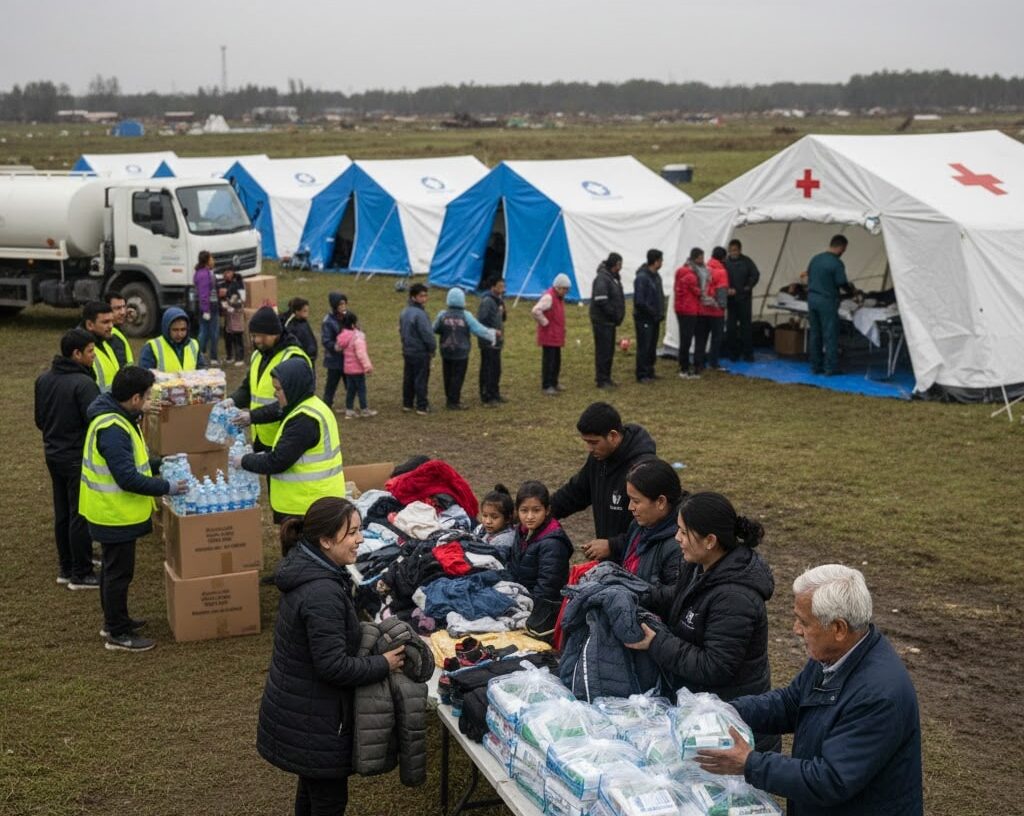
When emergencies strike, donations to thrift stores like Red Racks directly support relief efforts. Here’s how your contributions help communities recover:
- Emergency Supplies: Donated items are sold to fund critical resources like food, water, and shelter.
- Recovery Programs: Funds help rebuild homes, schools, and infrastructure, covering gaps left by insurance.
- Financial Assistance: Cash donations provide families with immediate aid for housing, medical bills, and other urgent needs.
- Repurposing Unsold Items: Unsold goods are recycled or sold to generate additional funds for disaster relief.
- Community Preparedness: Proceeds fund disaster training, emergency vehicles, and pre-positioned supplies.
In 2025, efforts like these supported thousands of families affected by disasters, delivering meals, hygiene kits, and financial aid. Donating or shopping at thrift stores turns everyday items into life-saving support for those in need.
1. Purchasing Emergency Supplies
Donated items play a crucial role in funding emergency supplies by being sold quickly generate cash. Take Red Racks Thrift Stores in Missouri, for instance – each donation contributes to a fund that can be swiftly converted into essential resources for local communities in need. This approach ensures a flexible and fast response during crises.
The Salvation Army, operating in 133 countries, uses thrift store sales to support its emergency services. As they emphasize:
“Financial donations are always the BEST way to help during a disaster. A cash donation allows charitable relief agencies like The Salvation Army to quickly buy whatever disaster survivors need most!”
The speed and flexibility of cash donations are unmatched. For example, during the Missouri and Arkansas floods in May 2017, the American Red Cross used available funds to send pallets of water to western Ripley County, where residents faced severe water restrictions. By May 7, they had distributed over 10,270 meals and nearly 32,465 relief items across 15 shelters. Turning donated goods into cash allows relief organizations to purchase supplies locally, cutting down delivery times and boosting the local economy during recovery efforts.
The Salvation Army has also streamlined its response with standardized relief kits. Their $25.00 Clean-Up Kit, for instance, includes a five-gallon bucket stocked with essentials like mop and broom heads, collapsible poles, gloves, bleach, respirator masks, and trash bags. During the April 2019 Missouri River flooding, John Callahan, the Emergency Disaster Services Director, distributed over 50 of these kits to families affected. A simple bucket filled with the right tools can bring immediate, practical support to those in need, offering a sense of hope and control in challenging times. This efficient use of funds ensures that relief efforts remain both timely and impactful.
2. Funding Recovery and Rebuilding Programs
While emergency responses provide immediate relief, the process of rebuilding lives and communities often stretches over months or even years. Quick access to cash helps families secure essential supplies in the short term, but sustained donations are what truly drive long-term recovery. Contributions through organizations like Red Racks play a crucial role here, ensuring communities have the resources to tackle significant challenges like repairing homes, restoring schools and community centers, and covering costs that insurance often doesn’t fully address.
In January 2025, Habitat for Humanity of Greater Los Angeles introduced the Accelerator Fund, offering grants of up to $10,000 per household. This initiative is designed to cover expenses that are frequently overlooked by insurance policies or FEMA, such as permitting fees, utility delays, and legal complications.
The Austin Disaster Relief Network (ADRN) exemplifies the power of sustained funding. This network, consisting of 165 churches and 4,500 volunteers, distributed over $3.5 million in aid between 2009 and late 2025, directly benefiting more than 17,000 individuals and 2,300 families. Executive Director Daniel Geraci highlighted their commitment:
“The Austin Disaster Relief Network is monitoring the water level… and we are ready to respond with clean up and emotional, physical and spiritual support to disaster survivors… we are prepared to deliver the same level of support as necessary.”
Their work includes funding home repairs, supplying building materials, and providing ongoing case management to guide survivors through the often-complicated recovery process.
Recovery efforts go beyond just rebuilding physical structures. After the devastating Joplin tornado in 2011, the Red Cross supported over 1,500 families with mental health services and local partnerships. This holistic approach acknowledges that true recovery involves more than bricks and mortar – it requires addressing emotional well-being, financial stability, and the reestablishment of community ties.
Investing in disaster resilience yields substantial returns. Research shows that for every $1 spent on resilience-building measures, communities save $6 in future recovery costs. Donations don’t just provide immediate relief; they empower communities to rebuild stronger and prepare for future challenges. This aligns with the idea of a circular economy, where everyday goods contribute to long-term resilience and recovery. Sustained funding efforts like these lay the groundwork for stronger, more prepared communities.
3. Providing Direct Financial Assistance
When disaster strikes, families often face immediate expenses that donated goods just can’t cover. Direct financial assistance steps in to bridge this gap, offering cash to help with urgent needs like temporary housing, medical bills, and other essentials. Organizations such as Red Racks Thrift Stores play a crucial role in this process by turning donated items into funds that support emergency relief efforts. This approach complements emergency supplies and rebuilding strategies, providing households with the flexibility to address their most pressing concerns.
Cash assistance is incredibly effective because it’s both fast and adaptable. For example, in early 2025, the American Red Cross introduced its “Immediate Financial Assistance” program to aid residents affected by severe floods in Washington. This program gave families the ability to handle urgent disaster-related expenses without delay. Later that same year, in November 2025, their Long-Term Recovery Program distributed over $1 million in financial aid to Texas flood survivors, helping them cover costs that went far beyond temporary shelter. During fiscal year 2023 alone, donations helped provide more than 301,000 overnight stays in safe locations for displaced families. Additionally, caseworkers developed personalized recovery plans to address each household’s unique challenges.
“The best way to provide immediate relief to your neighbors facing emergency situations is through a monetary donation.” – American Red Cross
This approach also benefits local communities. For instance, in March 2025, the Salvation Army of Greenville relocated its thrift store to increase local funding for direct assistance programs. Major Mike Harris highlighted how this model works:
“The money generated by sales at the Salvation Army Thrift Stores stays in Greenville to fund its men’s and women’s homeless shelters, diversion program, and rent and utility assistance for locals who need it.”
The importance of this strategy was evident after Hurricane Helene, when the organization was able to quadruple the assistance provided to the community.
4. Repurposing Unsold Items for Relief Efforts
Thrift stores have found a way to turn unsold donations into a lifeline for those in need during emergencies. By redirecting these items, they not only reduce waste but also provide critical resources for disaster relief efforts. This strategy keeps usable materials out of landfills while ensuring they serve a greater purpose.
Take clothing, for example. Items that don’t sell are often passed on to third-party vendors, who then distribute them to other thrift stores. The revenue generated from these transactions supports disaster relief programs. As the American Red Cross puts it:
“Clothing is sold to thrift stores and a percentage of the proceeds benefit Red Cross disaster relief”.
This system doesn’t just fund relief efforts – it also minimizes textile waste, creating a win-win situation.
It’s not just clothing that gets a second chance. Organizations like Habitat ReStore accept surplus building materials, used furniture, and appliances. These items are resold, diverting massive amounts of waste from landfills each year. The proceeds go toward helping families build affordable housing, addressing long-term recovery needs after disasters.
In crises, these repurposed goods either provide direct aid or are converted into funds, offering immediate support. For instance, Red Racks Thrift Stores play a key role by recycling unsold items. Whether these donations are distributed to shelters or turned into funds, they continue to make an impact long after leaving store shelves. This cycle of reuse and recycling strengthens the ability to respond effectively to emergencies.
5. Strengthening Community Preparedness
Thrift store donations play a crucial role in funding programs that help communities prepare for future disasters. Beyond immediate relief and long-term recovery, these funds are channeled into training disaster relief workers and volunteers in essential areas like incident management, canteen operations, and first aid. The impact of this investment is striking: for every $1 spent on preparedness, communities can save $7 in response and rebuilding costs.
Take the example of Mercy Corps, which created 20 Resilience Hubs in Puerto Rico after Hurricane Maria. These hubs, supported by donations, became lifelines during Hurricane Fiona in 2022, offering meals, power, and communication services. Allison Dworschak, Director of Caribbean Resilience Initiative at Mercy Corps, highlighted the importance of this approach:
“By upgrading infrastructure that communities already rely on, the Resilience Hub approach provides a more sustainable path forward”.
Funds from thrift store sales also help organizations maintain vital emergency infrastructure. For instance, The Salvation Army uses these proceeds to keep a fleet of emergency response vehicles, including mobile canteens and kitchens, ready for action. They also pre-position essential supplies across the country to ensure rapid deployment when disaster strikes.
In late 2025, during the response to Hurricane Melissa, The Salvation Army utilized donated funds to install 20 Starlink satellite units in remote Jamaican communities. These units restored critical connectivity and provided families with much-needed counseling and care.
Red Racks Thrift Stores also contributes by supporting Disabled American Veterans and communities in Missouri. Revenue from donations is used to build systems that protect vulnerable populations and enhance community resilience.
Conclusion
Donating to a thrift store goes far beyond clearing out your closet – it sets off a chain reaction of support that strengthens communities in their toughest times, aiding both immediate needs and long-term recovery efforts.
Take Hurricane Melissa as an example. Between October and December 2025, donations helped deliver 5,000 food parcels, 3,000 hygiene kits, 13,000 hot meals, and $248,000 worth of in-kind aid. Behind these numbers are real families who found relief and hope after unimaginable losses.
Red Racks Thrift Stores, run by Disabled American Veterans across Missouri, play a key role in this network of care. They provide ongoing support like medical transport, help with benefit claims, and emergency preparedness programs. These veteran-led initiatives align seamlessly with broader community emergency strategies, ensuring no one is left behind.
When you donate to or shop at Red Racks Thrift Stores, you’re contributing to more than just a store – you’re funding emergency supplies, job training programs, and essential response tools. It’s a simple way to help build a stronger, more prepared community for whatever challenges lie ahead.
FAQs
How do donations to thrift stores provide help during emergencies?
When you donate to thrift stores, your contributions can make a big difference in emergency relief efforts. Stores like Red Racks Thrift Stores use the money earned from selling donated items to support programs that provide aid during natural disasters and other crises. These funds help supply essential items like clothing, blankets, and other necessities to people in need.
Even items that don’t sell often find a second life through recycling or repurposing, ensuring nothing is wasted while still supporting relief efforts. By donating, you’re not just helping individuals and families during tough times – you’re also playing a part in building a more compassionate and resourceful community.
How do donations create lasting benefits for communities recovering from disasters?
Donations are a lifeline for communities working to recover and rebuild after disasters. They help restore homes, repair infrastructure, and revitalize local businesses, which are essential for getting the economy back on track. Beyond that, donations ensure that people have access to critical health and mental health services during times of immense need.
But the impact of donations doesn’t stop there. They also support long-term efforts like disaster preparedness and risk reduction, helping communities better withstand future challenges. In this way, donations don’t just address immediate needs – they lay the foundation for stronger, more resilient communities in the years ahead.
What happens to unsold items from thrift stores during emergencies?
Unsold items from thrift stores frequently find a second life in disaster relief efforts. These goods are passed on to organizations that transform them into emergency supplies, such as kits or essential items like clothing and blankets, which are distributed to families facing crises.
This approach not only minimizes waste but also delivers much-needed support to communities hit by natural disasters or other emergencies. When you donate to or shop at thrift stores, you’re becoming part of a larger cycle of generosity that impacts lives far beyond the storefront.