Repairing clothes is one of the simplest ways to cut down on textile waste and reduce the demand for new clothing production. Every year, the U.S. generates 17 million tons of textile waste, with 85% of it either landfilled or burned. This waste is not only avoidable – 95% of discarded textiles can be reused or recycled – but also harmful, as synthetic materials take centuries to decompose and release toxic pollutants.
Here’s why repairing clothes matters:
- Keeps clothes out of landfills: Extending a garment’s life by just nine months can lower its environmental impact by 20–30%.
- Reduces overproduction: Every piece repaired means fewer resources spent on making new items.
- Cuts emissions: The fashion industry accounts for up to 10% of global greenhouse gas emissions. Repairing reduces demand, which helps lower this footprint.
Simple fixes, like sewing on buttons or patching holes, can make a big difference. Community efforts, such as repair events, are already helping divert textile waste. Whether you repair at home or donate fixable items to thrift stores, small actions help combat the growing waste problem.
The Textile Waste Problem in the United States
Textile Waste Statistics
The United States is facing a growing crisis with textile waste. Textiles are among the fastest-growing waste streams in the country. Out of the 17 million tons of textiles discarded each year, 11.3 million tons are dumped into landfills, making up 7.7% of total landfill waste.
On average, each American throws away 81–100 pounds of textiles annually. Despite the staggering volume, only 14.7% of textiles are recycled, and clothing and footwear specifically see an even lower recycling rate of just 13%. Additionally, 3.2 million tons of textiles are incinerated for energy recovery. Shockingly, 95% of used clothing and household textiles could be reused or recycled, yet 85% still end up in landfills or are burned. This highlights an urgent need for better waste management practices.
| Management Pathway | Weight (Tons) | Percentage |
|---|---|---|
| Total Generated | 17,030,000 | 100% |
| Landfilled | 11,300,000 | 66.3% |
| Combusted for Energy | 3,220,000 | 18.9% |
| Recycled | 2,510,000 | 14.7% |
These statistics paint a clear picture of how modern consumption trends, particularly fast fashion, are worsening the problem.
How Fast Fashion Increases Waste
Fast fashion adds fuel to the textile waste fire by promoting overconsumption through rapid production cycles and low-cost clothing. Retailers like Shein and Temu have taken this trend to the next level – 40% of U.S. consumers report having recently purchased from these ultra-fast fashion brands. The result? People now wear garments an average of just 10 times before discarding them.
Overproduction is another major issue. Nearly one-third of all clothes produced each season remain unsold and often go straight to landfills. Sheng Lu, a professor at the University of Delaware, emphasizes the urgency of addressing this issue:
“The waste itself is still growing, and this issue remains a very serious concern. We need to give more attention to it, or find an innovative way to solve this problem”.
The environmental consequences are equally troubling. Fast fashion depends heavily on inexpensive synthetic fibers like polyester and nylon, which are petroleum-based and can take up to 200 years to decompose. This reliance on synthetic materials contributes significantly to global pollution, with the garment industry responsible for up to 10% of the world’s greenhouse gas emissions – more than international flights and maritime shipping combined. Additionally, the industry uses enough water annually to fill 37 million Olympic-size swimming pools.
These alarming trends underline the importance of shifting consumption habits and embracing strategies like repairing and reusing clothing to reduce waste and lessen environmental damage.
How Repairing Clothes Benefits the Environment
Fixing your clothes instead of tossing them out offers a straightforward way to tackle textile waste. By extending the life of your garments, you help reduce overproduction – a key driver of the fashion industry’s environmental impact. Let’s break down how these small acts make a big difference.
Making Garments Last Longer
Repairing clothes plays a critical role in reducing the mountains of textile waste ending up in landfills. Simple fixes, like sewing on a button or patching a hole, can significantly cut down on waste. Amanda Forster, a Materials Scientist at NIST, highlights the broader importance of this approach:
“Circular economy is about more than just recycling. It’s about keeping products in their useful form for as long as possible, then when you can’t use them anymore, finding a way to recycle them that preserves as much of their value as possible, and only sending them to the landfill as a last resort.”
Every year, nearly 17 million tons of textile waste are dumped into U.S. landfills. However, most clothing – except for items like stretch jeans with worn-out elastic fibers – can be repaired and reused. Liz Chamberlain, Director of Sustainability at iFixit, puts it simply:
“By extending the lifespan of your items, you’re keeping them out of landfills and that’s good for the planet.”
Even small repairs can help disrupt the cycle of waste, keeping garments in use and out of the trash.
Lowering Demand for New Clothing
Each piece of clothing you repair means one less new item that needs to be produced, saving valuable resources. For example, cotton farming requires heavy pesticide use, while synthetic fibers rely on fossil fuels.
The production of new clothing also involves energy-intensive dyeing processes that contaminate waterways with harmful chemicals, not to mention the carbon emissions from global shipping and distribution. By repairing and reusing your clothes, you sidestep these resource-draining processes. This is especially important considering that nearly one-third of all clothing produced each season goes unsold and often ends up in landfills. Fixing what you already own helps push back against the wasteful cycle of overproduction and overconsumption.
How to Repair Common Clothing Problems
You don’t need to be a sewing expert to tackle most clothing repairs at home. With a few basic tools and some simple techniques, you can save money, extend the life of your favorite garments, and reduce textile waste. As Elizabeth L. Cline, author of The Conscious Closet, explains:
“Repairing your clothing doesn’t require master-level sewing skills, and it can be easy and satisfying.”
From missing buttons to torn fabric, most issues can be fixed in just a few minutes. These small efforts not only keep your wardrobe intact but also support more sustainable habits.
Simple Repairs You Can Do Yourself
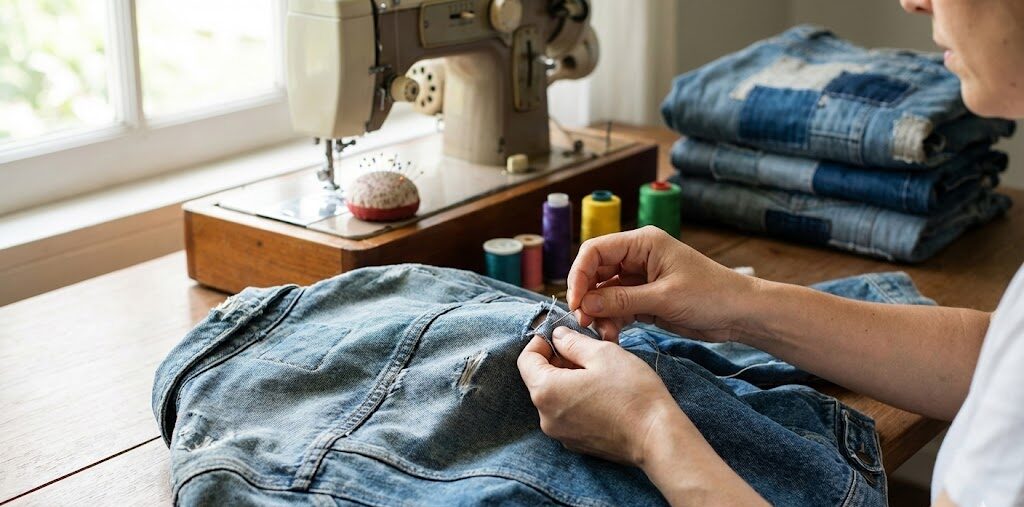
Missing buttons are one of the easiest problems to fix. To reattach a button, thread a needle and stitch through the holes, looping the thread several times to secure it. Tie a sturdy knot at the back to finish. For a quick, no-sew option, snap-on button kits are a great alternative.
Fallen hems can be repaired with iron-on hem tape. Simply place the tape between the fabric layers, press with an iron for about 10–15 seconds, and you’re done. Double-sided fabric tape is another option for a fast and secure fix.
Holes and tears can be patched using iron-on patches or by trying visible mending techniques like Sashiko, a Japanese method that uses decorative stitching. For holes in socks or sweaters, stretch the fabric over a tennis ball or lightbulb to keep it taut, then weave thread back and forth to cover the gap.
Stuck zippers can often be revived with a quick cleaning or a dab of zipper lubricant, which typically costs around $6.99. Fabric pilling on sweaters can be removed with a disposable razor or a fabric comb. For stubborn stains, consider covering them with an embroidered design or a patch. Each of these small repairs helps reduce waste and keeps your wardrobe functional.
Having the right tools and knowing where to find resources can make these repairs even easier.
Tools and Resources for Clothing Repairs
Creating a basic repair kit doesn’t require much. Start with essentials like needles (look for “sharps”), multi-colored thread, fabric scissors, straight pins, and a seam ripper. For quick fixes, add items like iron-on patches, fabric glue, and hem tape. A flexible tape measure, tailor’s chalk, and a thimble are also handy for precision and safety.
You can find many of these tools affordably. Thrift stores and garage sales often have steam irons and ironing boards, while dollar stores carry basic repair kits and thread packs. Craft stores like Michaels or Joann Fabrics stock more specialized items, such as denim thread or embroidery hoops.
If you’re new to clothing repairs, there’s no shortage of learning resources. YouTube is packed with tutorials on everything from threading a needle to mastering decorative mending. Websites like iFixit offer detailed visual guides for specific repairs, and TikTok creators often share modern tips and tricks. For hands-on help, check out local repair cafes or community sewing events where experienced volunteers can guide you through the process.
With just a little effort and the right tools, repairing your clothes can be both practical and rewarding.
How Thrift Stores Support Clothing Repair
Thrift stores play an essential role in giving repaired and repairable clothing a second chance, keeping them out of landfills. When you donate items – whether they’ve been mended or just need minor fixes – you contribute to a system designed to extend the life of textiles and cut down on waste. Dr. Tasha Lewis, Associate Clinical Professor at The Ohio State University, highlights this point:
“Goodwill and similar charities provide a channel for clothing disposal that is largely unmet by municipalities.”
These organizations act as key players in a circular economy. Even clothing that doesn’t make it to the sales floor often finds a new purpose. It might be transformed into industrial wiping cloths, home insulation, or carpet padding. Most textiles are suitable for reuse or recycling, and as long as donations are clean and dry, they rarely end up in landfills. This system ensures that donated clothing continues to serve a purpose.
Donating Repaired or Repairable Clothes
Taking the time to mend garments before donating can significantly extend their lifespan, cutting their environmental impact by up to 30% over nine months.
Interestingly, only about 10% to 20% of donated clothing is sold directly in thrift stores; the rest is sold to textile recyclers or resellers. Items in good condition are more likely to be sold locally, generating funds for charitable programs while keeping affordable clothing accessible. Even garments with minor issues, like a missing button or a broken zipper, can be recycled – but a quick repair greatly increases their chances of finding a new owner.
To maximize the reuse potential of your donations, ensure they are clean and dry. For added convenience, pair shoes with rubber bands and bundle children’s clothing sets together to maintain their value for resale.
Red Racks Thrift Stores‘ Recycling and Community Efforts
Red Racks Thrift Stores take these practices a step further by actively supporting the circular economy. With 12 locations across Missouri, they help fund programs for Disabled American Veterans while offering affordable clothing options to the community. Donating mended clothing to Red Racks not only supports sustainability but also strengthens local initiatives.
For items that don’t sell, Red Racks ensures they are recycled rather than sent to landfills. This approach aligns with the broader mission of thrift stores as essential hubs for waste diversion. As Amelia Trumble, CEO and Co-founder of Retold Recycling, explains:
“Everyone has ‘skin’ in the supply chain, so there’s incentive to not lose items to landfill because that will be a loss of revenue.”
Conclusion
Repairing clothes isn’t just about saving money – it’s a powerful way to reduce waste and lessen our environmental footprint. In the U.S. alone, the average person throws away about 82 pounds of clothing every year. Extending the life of a garment by just nine months can decrease its environmental impact by 20% to 30%.
By choosing to mend instead of replace, we can also cut down on the demand for new clothing production – an industry that contributes up to 10% of global greenhouse gas emissions. Plus, repairing clothes helps reduce microplastic pollution and conserves the valuable resources needed to make new garments.
“The single best thing we can do for the planet is to keep our stuff in use longer.” – Rose Marcario, CEO, Patagonia
This quote perfectly captures the value of repairing what we already own. Start small with simple fixes like sewing on buttons or patching holes. And when a repair feels beyond your abilities, consider donating the item to organizations like Red Racks Thrift Stores. These donations not only support Disabled American Veterans and community programs but also give textiles a second chance at life. Clean, dry, and repaired items – or even those that can still be fixed – help sustain recycling efforts and fund charitable initiatives, all while keeping clothing out of landfills.
FAQs
How does repairing your clothes help reduce waste?
Repairing your clothes is a smart way to cut down on waste and give your wardrobe a longer life. It keeps items out of landfills and helps lessen the impact of textile disposal on the planet. In the U.S. alone, about 17 million tons of textile waste are dumped in landfills every year, contributing to pollution and draining resources.
By fixing small rips, sewing on missing buttons, or patching up worn spots, you can extend the life of your clothes and reduce the need for constant new purchases. This not only saves you money but also supports a more resource-conscious approach to fashion, encouraging a cycle of reuse and conservation.
What are some easy ways to repair clothes at home?
Repairing clothes at home is easier than it sounds and can make your favorite garments last longer while cutting down on waste. With just a few basic tools – like a needle, thread, scissors, or even fabric glue – you can tackle common clothing fixes such as:
- Replacing a missing button: Grab a needle and matching thread, line up the button where it belongs, and secure it with a few firm stitches.
- Patching small holes or tears: Take a sturdy fabric scrap (like denim), place it under the hole, and use a simple running stitch to hold it in place.
- Fixing a stuck zipper: Realign the zipper teeth using pliers or sew a fabric stop at the bottom to keep the slider from slipping off.
These small repairs not only save you money but also help reduce clothing waste, keeping items out of landfills. Red Racks Thrift Stores champions this approach by encouraging shoppers to repair and reuse clothing whenever they can.
How do thrift stores help reduce clothing waste?
Thrift stores play an important role in cutting down on textile waste by giving used clothing a second chance. In the U.S., the average person discards about 82 pounds of clothing annually, much of which could still be reused or repurposed. By accepting donations and reselling wearable items, thrift stores help keep these garments out of landfills and reduce the demand for producing new ones.
Extending the life of clothing also helps lessen the environmental toll of fast fashion, which is responsible for up to 10% of global greenhouse gas emissions and consumes large amounts of water. Take Red Racks Thrift Stores as an example – they not only keep clothing out of landfills but also support Disabled American Veterans and local communities. Shopping secondhand at places like Red Racks is a simple way to embrace sustainability while scoring affordable and one-of-a-kind finds.