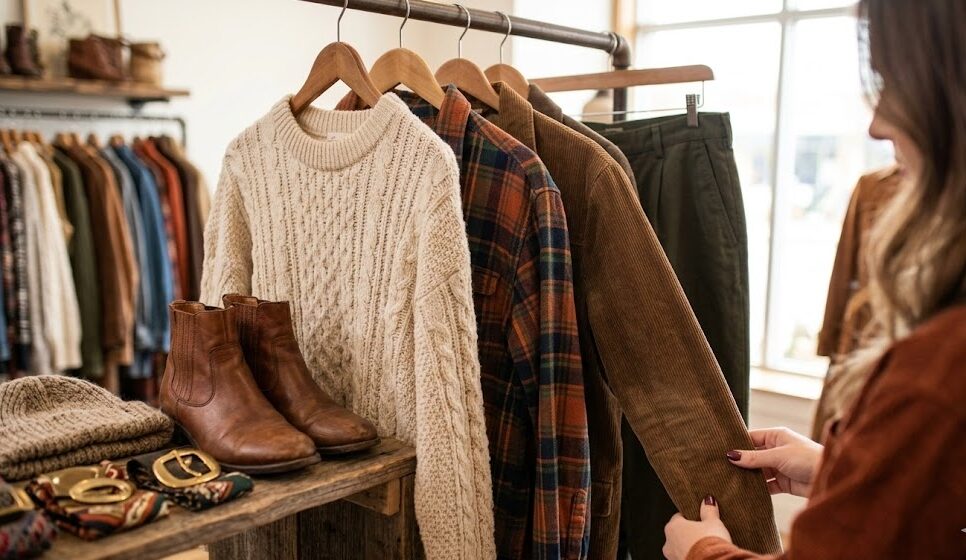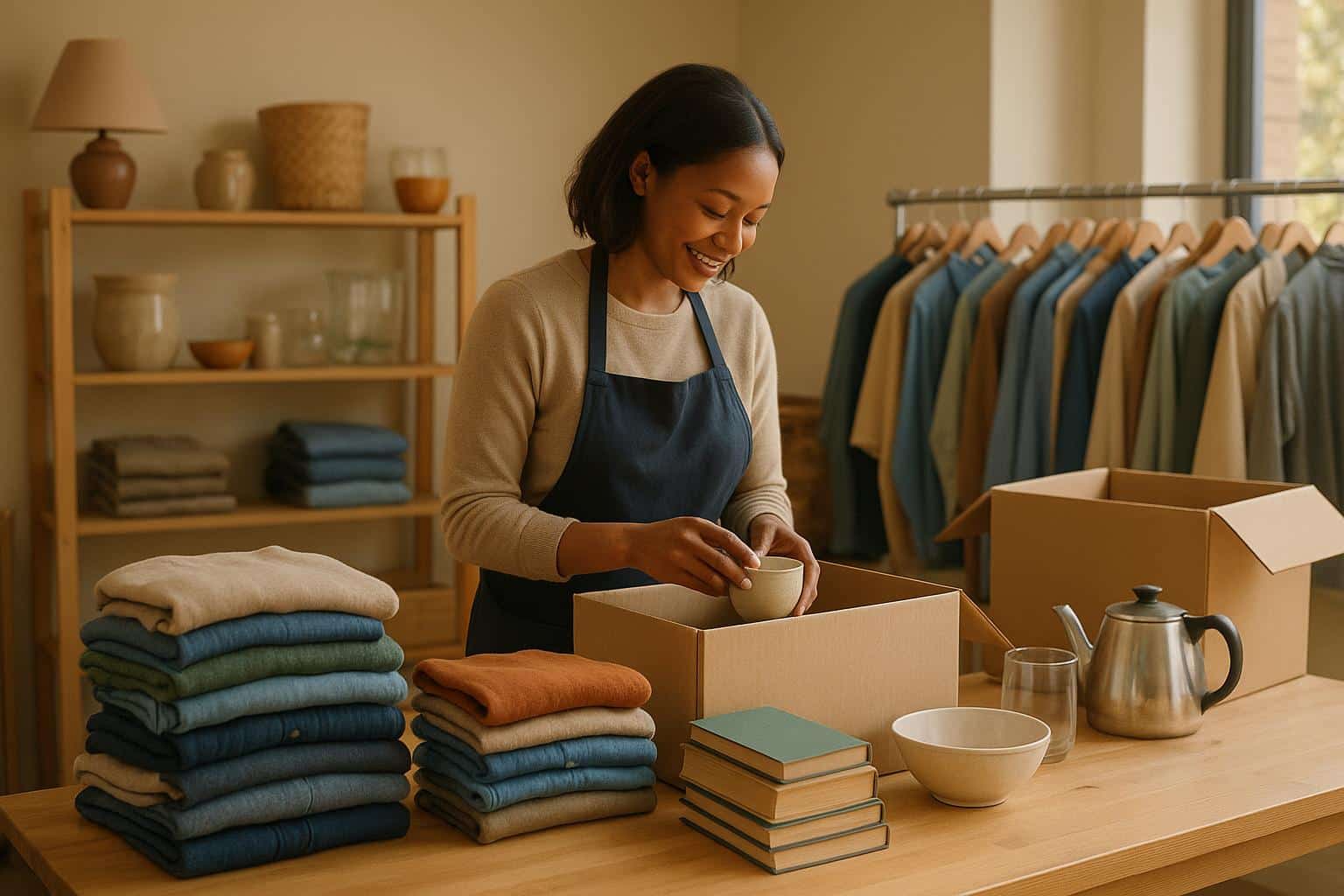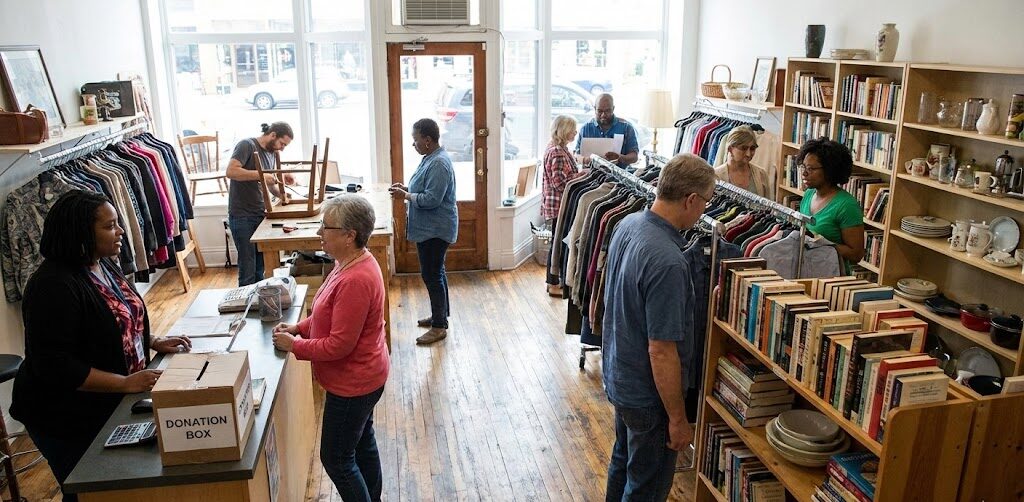
Thrift stores are key players in creating a reuse-driven economy. By extending the life of donated goods, they reduce waste, conserve resources, and offer affordable shopping options. Here’s why they matter:
- Waste Reduction: Millions of pounds of textiles and household items are kept out of landfills annually.
- Resource Conservation: Buying secondhand saves water, energy, and materials. For example, a thrifted pair of jeans can cut carbon emissions by up to 90%.
- Affordable Shopping: Families can access quality items at low prices, helping to stretch budgets.
- Community Support: Many thrift stores fund local programs, like job training or veteran support, while creating jobs and volunteer opportunities.
- Education: Stores teach shoppers about sustainable habits through workshops, donation drives, and in-store campaigns.
Thrift stores like Missouri’s Red Racks Thrift Stores also recycle unsellable items, support Disabled American Veterans, and provide economic benefits by creating local jobs. Whether donating, shopping, or volunteering, you can make a difference by participating in this cycle of reuse.
Environmental Benefits of Thrift Stores
Diverting Waste from Landfills
Thrift stores play an essential role in reducing the amount of waste that ends up in landfills. By donating items, people give goods a second chance at life, keeping them out of the trash cycle.
Every year, thrift store networks help divert millions of pounds of textiles, furniture, electronics, and household goods from landfills. This effort not only reduces the strain on already overfilled landfills but also lessens the environmental pollution caused by waste disposal. By keeping these items in circulation, thrift stores ease the burden on municipal waste systems.
Some organizations go even further. For example, Red Racks Thrift Stores recycle unsold goods to minimize landfill contributions. This approach aligns with their mission to serve both their communities in Missouri and the environment.
Ultimately, this system of waste diversion not only helps prevent environmental damage but also conserves valuable resources.
Saving Water, Energy, and Raw Materials
When you buy secondhand, you’re doing more than snagging a bargain – you’re preserving resources. Producing new items, especially clothing, requires vast amounts of water, energy, and raw materials. For instance, manufacturing a single cotton t-shirt consumes an astonishing 2,700 liters (713 gallons) of water, while a pair of jeans requires about 1,800 gallons. By purchasing secondhand clothing, you’re cutting out the need for these resources entirely.
Thrift shopping also bypasses the energy-intensive processes involved in manufacturing. Research suggests that extending the life of clothing by just nine months can reduce its carbon, water, and waste footprints by 20–30%. For example, choosing thrifted jeans and a shirt over new ones can save over 4,400 gallons of water. When millions of people make similar choices, the collective resource savings are staggering.
This stands in sharp contrast to the fast fashion industry, which has a far heavier environmental impact, as outlined below.
Thrift Stores vs. Fast Fashion: A Comparison
The environmental difference between thrift shopping and fast fashion couldn’t be clearer. Fast fashion operates on a linear model: produce, consume, dispose. This cycle generates significant waste and pollution at every step. Thrift stores, on the other hand, embrace a circular model that prioritizes reuse and resource conservation.
| Factor | Fast Fashion (New) | Thrift Shopping (Secondhand) |
|---|---|---|
| Carbon Emissions | High (2.5 kgCO₂e per wear for jeans) | Up to 90% lower emissions |
| Water Usage | 1,800 gallons per pair of jeans | No new water required |
| Textile Waste | 92 million tons globally per year | Diverts clothing from landfills |
| Resource Demand | Heavy extraction of new materials | Relies on existing resources |
| Production Impact | Chemical runoff and water pollution | No new production required |
| Economic Model | Linear: take-make-dispose | Circular: reuse–extend–recycle |
The global fashion industry is responsible for a staggering 8–10% of worldwide carbon emissions, releasing around 1.2 billion tons of carbon each year. Fast fashion’s rapid production cycles encourage a disposable mindset, where items are often worn only a few times before being discarded. This creates a relentless stream of waste.
By choosing secondhand, shoppers can drastically reduce these impacts. For instance, buying thrifted jeans instead of new ones can cut carbon emissions by up to 90%. Additionally, secondhand purchases eliminate the water pollution and chemical runoff associated with dyeing and manufacturing processes, while also consuming far less energy.
This stark contrast highlights how thrift shopping supports a circular economy by reusing existing resources rather than depleting new ones.
Experts from the EPA and other sustainability organizations consistently emphasize these environmental benefits. Thrift shopping isn’t just a minor improvement – it represents a shift toward more responsible consumption that addresses critical issues like climate change, water scarcity, and pollution.
The growing popularity of secondhand shopping reflects this awareness. In 2022, the secondhand apparel market hit $91.12 billion, showcasing how more people are turning to thrift stores as a practical, eco-friendly alternative to fast fashion. By doing so, they’re protecting the planet while meeting their everyday needs.
Community and Economic Benefits
Building Community Connections
Thrift stores are more than just places to shop – they’re spaces where communities come together. Many rely on volunteers for daily operations and special events, giving people a chance to develop skills and contribute to their neighborhoods. Whether it’s sorting donations or organizing displays, these shared efforts strengthen the bonds between neighbors.
These stores often partner with local organizations like food banks, shelters, and schools to host donation drives and provide essential resources. These collaborations create networks of support that uplift entire neighborhoods.
Take Red Racks Thrift Stores, for example. This veteran-owned network operates 12 locations across Missouri in cities like Kansas City, Joplin, Springfield, and Independence. Their mission goes beyond retail – they directly support Disabled American Veterans while fostering a sense of community among shoppers and volunteers from all walks of life. A trip to a thrift store becomes more than a shopping experience; it’s a way to connect with others and make a difference.
The impact doesn’t stop there. Proceeds from thrift stores often fund local programs aimed at job training, education, and social services. By shopping or donating, you’re not just exchanging goods – you’re supporting initiatives that help your community thrive.
Thrift stores also serve as informal classrooms, teaching people about sustainability and mindful consumption. Through in-store activities and outreach programs, shoppers learn how their choices affect both the environment and the local economy. These lessons lay the groundwork for the economic benefits discussed next.
Affordable Shopping for All Income Levels
For families on tight budgets, thrift stores are a lifeline. They offer essential items – like clothing, furniture, and household goods – at prices that make them accessible to everyone.
The savings are real. A thrifted outfit might cost around $15, compared to $50–$100 for a new one. For families managing limited incomes, this affordability means they can meet their needs without sacrificing dignity or stretching their budgets too thin. The money saved can go toward other essentials like food, housing, or medical expenses.
Red Racks Thrift Stores has been providing affordable, quality items since 1958. As they proudly state:
“We’ve been providing great prices and quality items to savvy shoppers since 1958”.
Their commitment ensures that Missouri residents, regardless of income level, can shop without financial stress.
Many thrift stores also offer targeted discounts for seniors, students, and veterans, acknowledging the unique financial challenges these groups face. These programs not only make shopping more accessible but also reinforce the idea that thrift stores are there to serve everyone. When families save on everyday essentials, they can allocate resources toward other needs, creating more stable household finances and contributing to a healthier local economy.
Keeping Cultural History Alive
Thrift stores do more than save money – they help preserve the stories of our communities. Vintage clothing, antique furniture, and retro collectibles bring history to life, offering a glimpse into the traditions, fashion, and craftsmanship of earlier generations.
In many ways, thrift stores act like living museums. Each item tells a story, connecting shoppers to their community’s identity and history. Some stores even dedicate sections to vintage or locally significant items, turning a casual shopping trip into a chance to learn about the past and feel a sense of pride in local heritage.
For younger shoppers, these items provide a hands-on connection to history that goes beyond what they might see online or in books. It’s a way to experience the past in a tangible, meaningful way.
Teaching Consumers About Circular Economy Practices
Thrift stores do more than just sell secondhand items – they play a key role in teaching people how to adopt sustainable habits and make environmentally conscious choices.
In-Store Education Programs
Thrift stores have become informal hubs for learning about sustainability. Through eye-catching signs, engaging workshops, and awareness campaigns, these stores help shoppers understand how buying secondhand can extend the life of products, reduce waste, and conserve resources.
When you step into many thrift stores, you’ll likely see displays that highlight the environmental benefits of your purchases. For example, some signs break down how much water is saved or how many carbon emissions are avoided by choosing secondhand over new. These visuals make the impact of your choices clear and tangible.
Workshops are another popular way thrift stores educate their customers. Events focused on upcycling and repair teach practical skills, like mending clothes, refurbishing furniture, or repurposing household items. These hands-on sessions not only reduce waste but also show that worn or outdated items can be given a second life.
Donation drives are equally impactful, serving as both a way to collect goods and an opportunity to educate participants about resource conservation. Many thrift stores team up with schools and environmental organizations to host these events, making it a family-friendly way to learn about sustainable living. These partnerships help spread the message beyond the store itself and encourage entire communities to embrace circular practices.
Take Red Racks Thrift Stores, for example. They use in-store signage to educate shoppers about sustainability and collaborate with local groups to promote circular living. By combining environmental education with a focus on community, they make sustainable practices more accessible and meaningful for everyone.
Some stores even track and share metrics, like the amount of goods diverted from landfills or the carbon emissions avoided through secondhand sales. These numbers show customers that their choices, no matter how small, contribute to a larger, collective impact.
Changing Shopping Habits Across Generations
Thrift stores are at the heart of a cultural shift toward more mindful consumption. Nearly 90% of U.S. consumers have shopped or donated at a thrift store, up from 83% just a year earlier. This isn’t merely a passing trend – it reflects a bigger change in how people think about shopping.
Gen Z is leading the charge. Younger shoppers are turning to thrift stores as an alternative to fast fashion, driven by both ethical and environmental concerns. They prioritize sustainability and individuality, and thrift stores deliver on both by offering unique, affordable items that also reduce environmental impact.
The statistics back this up. 66% of thrifters believe buying secondhand is better for the environment than purchasing new. Even more telling, 48% of consumers now care more about the environmental impact of their clothing than they did three years ago.
The growth of the resale market underscores this shift. Over the past five years, it has grown 21 times faster than traditional retail. What was once seen as a budget-friendly option has become a mainstream choice for those who value sustainability and personal expression.
Red Racks Thrift Stores has witnessed this evolution firsthand. Since their founding in 1958, they’ve seen multiple generations embrace thrift shopping for various reasons. Today, their focus on “The Future of Thrift” keeps secondhand shopping appealing and relevant for younger and older generations alike. With 12 locations across Missouri, they offer spaces where families can share and pass down values like reuse and resourcefulness.
This generational shift matters because it lays the groundwork for lasting change. When young people prioritize sustainability now, they’re likely to carry those values into adulthood and teach them to their children. This creates a ripple effect that embeds circular economy principles into everyday life.
Daily Habits for Circular Living
Living sustainably isn’t about big, dramatic changes – it’s about small, consistent actions that anyone can take. Thrift stores make it easier to adopt these habits and integrate them into daily life.
- Donate instead of throwing away. The average American generates 81 pounds of textile waste annually, but donating keeps those items in circulation and out of landfills.
- Repair before replacing. Extending the life of products is a simple way to reduce waste. Many thrift stores now offer repair workshops or connect shoppers with local repair services.
- Shop secondhand first. Choosing used items can significantly cut carbon emissions. For example, buying secondhand jeans can reduce emissions by up to 90%.
- Get creative with repurposing. Upcycling projects breathe new life into old items, and thrift stores often share inspiring customer stories on social media or at community events.
- Make it a family effort. Involving kids in donation drives or secondhand shopping helps instill sustainable habits early. It also shows them that value isn’t tied to how new something is.
Red Racks Thrift Stores supports these habits with convenient locations across Missouri where families can donate and shop. Even unsold items are recycled, ensuring nothing goes to waste and demonstrating a full commitment to circular practices.
Case Study: Red Racks Thrift Stores
Red Racks Thrift Stores stands as a shining example of how businesses can integrate responsible practices with community support. Operating across Missouri, this veteran-owned organization merges a commitment to reducing waste with a mission to uplift local communities.
Supporting Disabled American Veterans
Red Racks operates under the umbrella of Disabled American Veterans (DAV), a 501(c) nonprofit organization. Proceeds from thrift store sales directly fund DAV programs, which include providing medical transportation for veterans to attend VA appointments, offering advocacy services, and assisting with benefits applications. These efforts ensure that veterans receive the care and support they need, showcasing how thrift store operations can play a vital role in strengthening community ties and fostering resilience.
In addition to supporting veterans through these programs, Red Racks offers shoppers affordable, high-quality clothing and household items. The organization also works closely with local agencies to extend its reach, hosting community events and providing services that benefit veterans and their families throughout Missouri.
Recycling Programs and Waste Management
Red Racks takes a thoughtful approach to waste management, aligning with the principles of waste diversion. At its 12 Missouri locations, donations are carefully sorted by staff. Usable items like clothing, toys, and household goods are placed on the sales floor, while non-sellable items are repurposed through recycling partnerships.
For example, textiles that can’t be sold are transformed into industrial materials such as cleaning rags, insulation, or mattress padding. This helps reduce the staggering 16 million tons of textile waste generated annually in the U.S. Electronics are also handled responsibly, with dedicated recycling efforts aimed at recovering valuable materials.
Although Red Racks doesn’t publish specific annual waste diversion figures, similar thrift stores often divert hundreds of thousands to millions of pounds of goods from landfills each year. Given the daily volume of donations processed across its 12 locations, Red Racks likely achieves comparable results, making a substantial impact on waste reduction in Missouri.
Creating Jobs in Missouri
Beyond its environmental and community contributions, Red Racks plays an important role in supporting the local economy by creating jobs across multiple cities in Missouri. From retail associates and donation processors to management and logistics staff, the organization offers a range of stable employment opportunities.
Red Racks actively seeks “value-driven and friendly faces” to join its team, providing competitive pay, comprehensive benefits, and chances for career advancement. Additionally, its corporate office in Kansas City supports the entire network, further stimulating economic activity and keeping resources within the community.
Conclusion
Main Points
Thrift stores play a crucial role in creating sustainable communities by tackling environmental challenges, boosting local economies, and building social connections. By rerouting millions of tons of textiles from landfills, conserving thousands of gallons of water with each purchase, and slashing carbon emissions by up to 90%, they make a measurable environmental impact.
On the community side, thrift stores provide meaningful jobs and fund essential social programs. For example, Red Racks Thrift Stores operates 12 locations across Missouri, offering competitive pay and benefits while supporting Disabled American Veterans. They also offer affordable shopping for people of all income levels, keeping money circulating locally and reviving vintage and one-of-a-kind items that preserve cultural heritage.
Beyond shopping, thrift stores educate consumers about sustainable practices. With nearly 90% of Americans having either shopped or donated at a thrift store, it’s clear that attitudes toward consumption and sustainability are evolving. These benefits show how thrift stores are reshaping communities and consumption habits.
Take Action
Here’s how you can contribute to this positive change:
- Donate your gently used items: Red Racks accepts donations every day from 9:00 AM to 9:00 PM at all 12 Missouri locations. Your contributions help keep goods in use and ensure affordable shopping options for your community.
- Shop secondhand: Visit Red Racks stores in Kansas City, Joplin, Springfield, Blue Springs, Independence, Lee’s Summit, or St. Joseph. Find unique treasures while supporting local economies and Disabled American Veterans.
- Explore career opportunities: Red Racks offers meaningful employment with benefits and growth potential. Joining their team allows you to make a living while contributing to environmental and social change.
FAQs
How do thrift stores promote sustainability and benefit the environment?
Thrift stores are champions of sustainability, offering secondhand items a second chance while cutting down on waste and easing the demand for new production. Many of these stores even take it a step further by recycling unsold goods, keeping them out of landfills.
Shopping at thrift stores isn’t just good for the planet – it’s a way to conserve resources, reduce pollution, and promote a more circular economy. Instead of items being tossed, they’re reused and repurposed. Plus, thrift stores often provide budget-friendly shopping options and play a vital role in supporting local communities through charitable programs.
How do thrift stores use their proceeds to support local communities?
Thrift stores frequently channel their earnings into initiatives that serve the local community. For instance, many support veterans’ groups, offer low-cost shopping alternatives, and encourage eco-friendly efforts by recycling items that don’t sell. These efforts do more than just minimize waste – they also generate employment opportunities and contribute to community development, leaving a positive mark on both individuals and the planet.
How can I support a circular economy by getting involved with my local thrift store?
Donating gently used or new items to your local thrift store can have a meaningful impact. These contributions help minimize waste, keep usable goods out of landfills, and allow someone else to enjoy them in their home.
On the flip side, shopping at thrift stores is another fantastic way to support sustainability. It extends the life of items, conserves resources, and often funds community programs – all while offering affordable choices for shoppers. Small actions like these play a big role in creating a more resourceful and connected community.