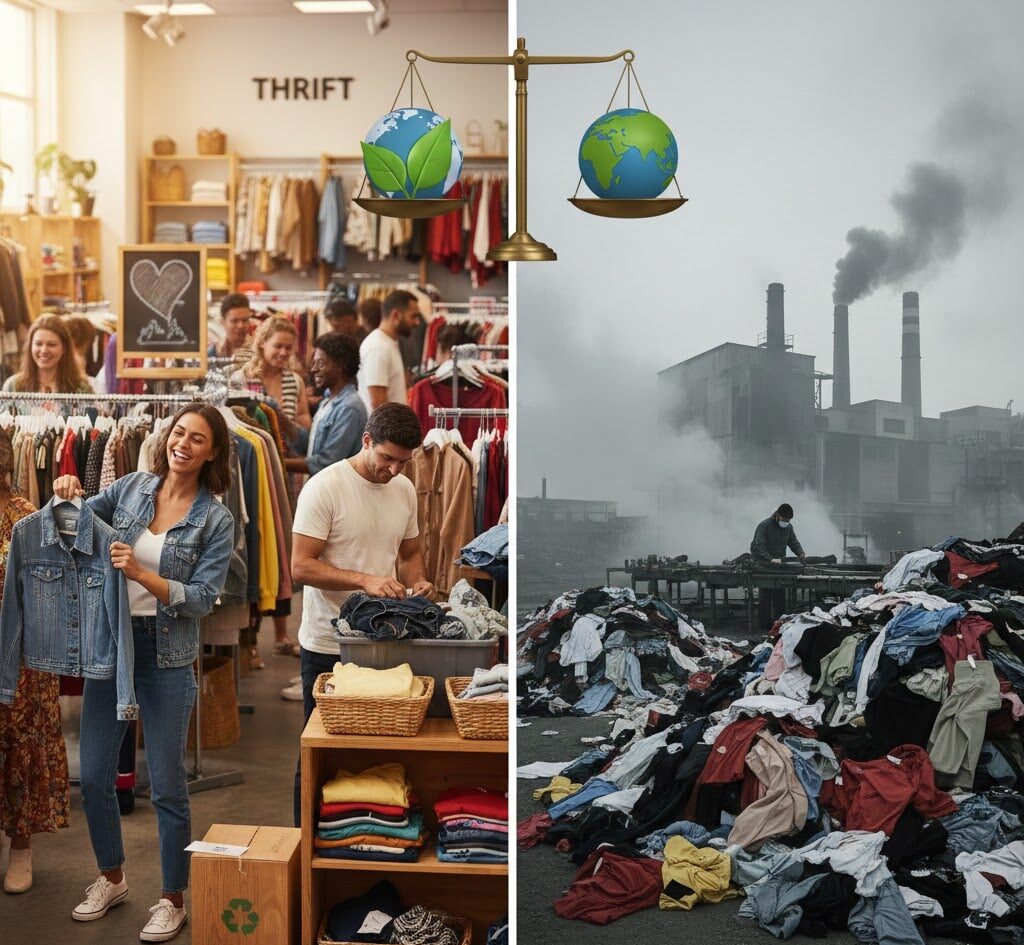
Thrift shopping beats fast fashion in every way that matters. It’s better for the planet, supports local communities, and saves money. Fast fashion’s cheap, trendy clothes come at a high cost – pollution, waste, and unethical labor practices. Meanwhile, thrift stores like Red Racks offer affordable, secondhand items that reduce waste, lower carbon emissions, and fund local causes like Disabled American Veterans.
Why Secondhand Wins:
- Environmental impact: Fast fashion generates 92 million tons of textile waste yearly and 10% of global carbon emissions. Thrift shopping cuts waste and reduces a garment’s carbon footprint by up to 90%.
- Community support: Thrift stores create local jobs and reinvest in communities. Red Racks, for example, supports veterans and recycles unsold items.
- Cost savings: Secondhand items are budget-friendly and last longer than fast fashion’s disposable clothing.
Quick Comparison:
| Factor | Thrift Shopping | Fast Fashion |
|---|---|---|
| Carbon Emissions | Up to 90% lower per item | 10% of global emissions |
| Waste | Diverts items from landfills | 92 million tons/year |
| Water Use | None for secondhand items | 1,800 gallons per jeans |
| Social Impact | Local jobs support causes | Exploits low-wage labor |
Environmental Impact Comparison
Examining the environmental impacts of fast fashion versus thrift shopping reveals a stark contrast between the two. Fast fashion’s practices leave behind a massive ecological footprint, while thrift shopping offers a greener, more sustainable alternative.
Fast Fashion’s Environmental Damage
Fast fashion’s large-scale operations come with heavy resource consumption and pollution. One of the most pressing issues is water use, largely driven by irrigation for cotton farming and the water-intensive dyeing and finishing processes involved in garment production.
Carbon emissions from fast fashion are equally concerning. The industry is responsible for about 10% of global carbon emissions, surpassing the combined emissions from international flights and maritime shipping. For perspective, manufacturing a single polyester t-shirt releases approximately 5.5 kg of CO₂, while a cotton t-shirt generates about 2.1 kg of CO₂. Jeans add even more to the problem, with their carbon footprint reaching 2.50 kgCO₂e per wear.
Textile waste further compounds the issue. Many discarded garments are made from synthetic materials that can take centuries to decompose. On top of that, the production processes often depend on toxic chemicals, which pollute water sources and harm ecosystems. The environmental toll of fast fashion underscores the urgent need for alternatives.
How Thrift Shopping Reduces Environmental Harm
Thrift shopping offers a solution by prioritizing reuse and recycling. Every secondhand purchase means one less item heading to a landfill – a crucial step in addressing the staggering amount of textile waste generated annually. By keeping clothing in circulation, thrift shopping significantly reduces waste and its associated environmental impacts.
Another key benefit is the reduced demand for new production. Buying secondhand garments cuts down on water usage, carbon emissions, and the release of harmful chemicals. Research shows that purchasing pre-owned clothing can lower the carbon footprint of a garment by up to 90% compared to buying new.
Thrift shopping also eliminates the need for new water resources. Each secondhand item represents water saved from the production process, contributing meaningfully to conservation efforts over time.
Organizations like Red Racks Thrift Stores take these benefits further by implementing recycling programs. Items that can’t be resold are recycled rather than discarded, ensuring materials are repurposed and kept out of landfills. When you donate gently used clothing to stores like Red Racks, you support a system that extends the life of garments and promotes sustainable consumption. Studies indicate that extending a garment’s life by just nine months can reduce its overall environmental impact by 20–30%.
Environmental Metrics
| Environmental Factor | Fast Fashion | Thrift Shopping |
|---|---|---|
| Carbon Emissions | 2.50 kgCO₂e per wear for jeans; 10% of global emissions | Up to 90% lower emissions for reused items |
| Water Usage | 1,800 gallons per pair of jeans | No new water required |
| Textile Waste | 92 million tons/year globally; 81 lbs per American/year | Clothing diverted from landfills |
| Resource Use | Heavy demand for new materials | Relies on existing resources |
| Production Impact | Toxic chemicals and water pollution | No new production required |
| Economic Model | Linear: produce, consume, dispose | Circular: reuse, extend, recycle |
This table highlights the sharp differences between fast fashion and thrift shopping. Fast fashion operates on a linear model, requiring constant resource extraction and generating enormous waste. In contrast, thrift shopping supports a circular economy by keeping items in use longer and reducing the need for new production. Opting for secondhand clothing saves water, reduces emissions, and helps cut down on textile waste. These differences make it clear why choosing thrift shopping is a meaningful step toward lessening our environmental footprint.
Social and Community Effects
When we talk about thrift shopping versus fast fashion, the conversation often centers on environmental concerns. But the social and economic impacts are just as important. These two models affect workers, local economies, and community networks in vastly different ways. Let’s take a closer look at how these differences play out in real life.
How Thrift Stores Benefit Communities
Thrift stores do more than sell secondhand goods – they create jobs that directly benefit local communities. Unlike fast fashion, which relies on overseas production, thrift stores hire locally for roles like store operations, donation sorting, and logistics. These jobs often come with benefits and opportunities for growth, providing stable employment that helps support families and local economies.
Take Red Racks Thrift Stores, for example. By hiring community members, they ensure that the jobs stay rooted in Missouri rather than being outsourced abroad. This approach keeps the economic benefits within the community, strengthening its foundation.
Beyond employment, thrift stores often operate with a charitable mission. Many, like Red Racks, use their proceeds to support local causes. Red Racks channels its earnings into programs for Disabled American Veterans, creating a cycle of giving that starts with local donations and ends with meaningful community support. When you shop there, you’re not just buying an item – you’re contributing to initiatives that help veterans and other community programs.
Affordability is another major advantage. Thrift stores provide access to quality clothing, household items, and toys at prices far below those of traditional retailers. For families on tight budgets, this can make a huge difference, stretching their dollars further and promoting economic fairness.
Thrift stores also serve as gathering places where people from all walks of life come together. Whether through donation drives, volunteer opportunities, or local events, these stores create spaces where neighbors can connect and build stronger community ties. They’re more than just stores – they’re hubs of activity and inclusion.
Fast Fashion’s Labor and Economic Problems
Fast fashion, on the other hand, comes with some serious social costs. Most of its production happens in countries with weak labor protections, where workers face long hours, low pay, and unsafe conditions. In some cases, child labor is still part of the supply chain. These practices aren’t just unethical – they’re built into a system designed to prioritize cheap production over worker welfare.
This model creates a “race to the bottom,” where vulnerable workers have little power to advocate for better conditions. Attempts to unionize or demand fair treatment often result in retaliation, leaving workers with few options.
The economic impact on local communities is equally troubling. Fast fashion shifts spending away from local businesses to multinational corporations. Instead of circulating money within neighborhoods, profits are funneled out, weakening the economic base of small towns and local economies. On top of that, the constant churn of inexpensive, disposable clothing diminishes demand for higher-quality, locally made goods, putting additional strain on small retailers and manufacturers.
Unlike thrift stores that reinvest in their communities, fast fashion offers little in return. Its business model extracts value without giving back, leaving local economies reliant on external corporations and increasingly fragile.
Social Impact Comparison
Thrift shopping doesn’t just reduce environmental harm – it also promotes a social system that prioritizes people and communities. Here’s how the two models stack up:
| Factor | Thrift Shopping (e.g., Red Racks) | Fast Fashion |
|---|---|---|
| Job Creation | Local jobs with benefits and growth opportunities | Overseas jobs with low pay and poor conditions |
| Community Support | Supports local charities and programs like Disabled American Veterans | Minimal reinvestment in local communities |
| Labor Practices | Adheres to U.S. labor laws with fair wages | Often exploits workers with unsafe conditions and low wages |
| Economic Impact | Strengthens local economies through employment and charitable giving | Drains local economies by redirecting funds to large corporations |
| Social Inclusion | Creates community hubs and fosters connections | Limited community engagement, more transactional in nature |
| Charitable Mission | Directly supports local causes | Focuses on corporate profits over community well-being |
This comparison highlights the stark differences between these two approaches. Thrift shopping supports workers, strengthens local economies, and fosters community connections. Stores like Red Racks show how retail can serve a greater purpose – helping veterans, providing affordable goods, and building a stronger sense of community.
Fast fashion, by contrast, operates on a model that prioritizes profits over people. Its low prices come at a high human cost, exploiting workers and draining resources from local economies. The harms extend far beyond environmental concerns, touching the lives of workers and communities in very real ways.
Where you choose to shop matters. Supporting thrift stores means investing in local jobs, charitable causes, and community development. It’s a way to choose fairness and compassion over exploitation, making a difference both locally and globally. For those who care about their neighbors and the well-being of workers worldwide, thrift shopping offers a more ethical way to consume.
How Each Model Shapes Consumer Behavior
The way we shop doesn’t just dictate what fills our closets – it also redefines how we view and interact with clothing. Fast fashion and thrift shopping rely on completely different business models, and these approaches shape our shopping habits in distinct ways. Understanding these differences sheds light on why thrift shopping aligns with sustainability, while fast fashion often fuels waste. Let’s dive into how these models influence the way we shop.
How Thrift Stores Encourage Better Shopping Habits
Thrift shopping naturally promotes more deliberate and thoughtful buying. Unlike fast fashion retailers that churn out large quantities of identical items, thrift stores offer a diverse mix of one-of-a-kind pieces, making every shopping trip an adventure.
Take Red Racks Thrift Stores, for example. Since 1958, they’ve been committed to providing affordable secondhand goods to communities across Missouri. Their straightforward approach – accepting donations, selling items at accessible prices, and recycling unsold goods – helps extend the life of clothing and reduces the need for resource-heavy production.
Here’s a striking fact: extending the life of a single piece of clothing by just nine months can cut its carbon, water, and waste footprint by 20–30%. When you buy secondhand, you’re not just saving money – you’re making a tangible difference for the planet.
Thrift stores also support a circular economy. Red Racks accepts gently used clothing, toys, and household items at all 12 of their Missouri locations, from 9:00 a.m. to 9:00 p.m. daily. This makes it easy for people to donate items they no longer need, keeping them out of landfills and in circulation.
Over time, thrift shoppers tend to prioritize quality, uniqueness, and durability over fleeting trends. They’re more likely to repair items, donate what they don’t use, and make purchasing decisions with long-term value in mind. Shopping at Red Racks offers more than environmental perks – it’s also a way to give back. Their veteran-owned mission supports Disabled American Veterans, strengthening local communities and fostering a deeper sense of responsibility with every purchase. Fast fashion, on the other hand, creates a very different consumer mindset.
Fast Fashion’s Throwaway Culture
Fast fashion thrives on a completely different philosophy. Its model revolves around rapid production and constant consumption. Brands release new styles at lightning speed, often pricing them so low that they feel disposable. This encourages shoppers to buy frequently, wear items only a few times, and toss them when trends shift or quality deteriorates.
The numbers paint a stark picture: Americans discard over 13 million tons of clothing annually, with the average person generating more than 81 pounds of textile waste each year. Fast fashion fuels this cycle of disposability.
The environmental toll is enormous. The relentless production of cheap clothing drains natural resources, pollutes waterways, and clogs landfills with items that could have had a longer life. And the financial cost adds up, too. While individual fast fashion items may seem cheap, the habit of buying low-quality items repeatedly can end up being far more expensive than investing in fewer, well-made pieces. Aggressive marketing only compounds the problem, encouraging constant wardrobe overhauls.
| Factor | Thrift Shopping | Fast Fashion |
|---|---|---|
| Purchase Frequency | Less frequent, need-based buying | Constant, impulse-driven purchases |
| Decision-Making | Careful consideration of need | Quick decisions based on trends |
| Garment Lifespan | Years (quality items last longer) | Months (quickly discarded) |
| Consumer Mindset | Prioritizes quality, uniqueness, and durability | Treats clothing as disposable |
| Economic Model | Circular: reuse, extend, recycle | Linear: produce, consume, dispose |
| Environmental Impact | Up to 90% lower emissions for items like jeans | High carbon footprint (e.g., 2.50 kgCO2e per wear for jeans) |
Shifting consumer habits begins with awareness. Recognizing the environmental, social, and financial consequences of fast fashion can empower people to make more sustainable choices. Thrift shopping, as demonstrated by Red Racks, provides a meaningful alternative – buying less, focusing on quality, and ensuring that clothing is valued rather than wasted. As more shoppers, particularly younger ones, embrace these benefits, thrift shopping not only reduces waste but also strengthens communities through initiatives like those at Red Racks.
Building Local Support for Secondhand Shopping
Shopping at local thrift stores does more than just reduce waste – it strengthens community ties and promotes mindful consumer habits. These stores act as gathering points, blending commerce with a sense of service, where neighbors unite around shared goals like sustainability and mutual support.
How Thrift Stores Strengthen Community Bonds
Thrift stores play a vital role in fostering local connections by creating a cycle of giving and receiving. When people donate items they no longer need, those goods become affordable options for others, bridging gaps between different members of the community.
But thrift stores don’t just offer budget-friendly shopping – they also create jobs. From retail to logistics and management, they provide stable employment opportunities that directly support the local economy. Many of these roles are filled by veterans and individuals from diverse backgrounds, offering not just jobs but also career paths with room to grow.
These stores also engage the community through donation drives, volunteer opportunities, and seasonal events that bring people together. These activities not only build a sense of belonging but also reduce waste by keeping goods in circulation and out of landfills. Additionally, thrift stores often partner with local nonprofits, schools, and community organizations to amplify their positive impact.
This approach creates a ripple effect, making thrift stores like Red Racks central to both sustainability efforts and community well-being.
Red Racks Thrift Stores‘ Veteran-Focused Mission
Red Racks Thrift Stores take this community-driven approach to a whole new level. Since 1958, this veteran-owned organization has been a cornerstone of Missouri communities, combining retail with a powerful social mission. Operated by Disabled American Veterans as a 501(c) organization, Red Racks uses its platform to support those who have served our country.
With 12 stores across Missouri, Red Racks functions as more than just a place to shop. Each location serves as a community hub, accepting donations from residents and providing affordable, high-quality items. What makes Red Racks stand out is its dual focus on retail and service. Every purchase helps fund programs for Disabled American Veterans, ensuring that the organization’s mission has a direct, tangible impact.
Red Racks also prioritizes hiring veterans, offering stable jobs with benefits and opportunities for growth. This not only addresses economic needs but also provides meaningful work for those transitioning from military service.
Their commitment to sustainability is equally impressive. Unsold items are recycled instead of being sent to landfills, ensuring that every donation is used to its fullest potential – whether through resale, recycling, or redistribution. Red Racks’ mission emphasizes serving the environment, our local community, and Disabled American Veterans, showcasing how these priorities work hand in hand.
Donating to Red Racks is easy, with all 12 locations accepting gently used or new items. For shoppers, every visit supports both sustainability and veteran causes, whether they’re donating, browsing, or exploring job opportunities. Each interaction strengthens local networks while advancing a mission that’s as meaningful as it is impactful.
With nearly 70 years of success, Red Racks has proven that thrift stores can do more than just sell secondhand goods – they can transform communities. By combining commerce with a clear social mission, they’ve created a system that uplifts veterans, supports local economies, and promotes sustainability. It’s a model of what’s possible when businesses prioritize both people and purpose.
Why Secondhand Shopping Is the Better Choice
Opting for secondhand over fast fashion isn’t just a personal choice – it’s a step toward a healthier planet and stronger communities.
The fast fashion industry leaves a heavy mark on the environment. It generates a staggering 92 million tons of textile waste every year, contributes to 8–10% of global carbon emissions, and uses around 1,800 gallons of water to make just one pair of jeans. Meanwhile, the average American discards more than 81 pounds of clothing annually, much of it made from synthetic materials that can sit in landfills for centuries.
Secondhand shopping turns this wasteful cycle on its head. For instance, buying pre-owned jeans instead of new ones can cut carbon emissions by up to 90% and completely eliminate the water waste involved in production. By simply extending the life of a garment, we directly reduce the need for new resources. These environmental benefits are just the beginning.
Thrift shopping also brings meaningful benefits to local communities. Thrift stores provide affordable, well-made items for families, create stable jobs with growth opportunities, and often support charitable efforts that make a real difference.
Take Red Racks Thrift Stores, for example. Since 1958, their 12 locations in Missouri have been more than just retail spaces – they’ve been pillars of support for Disabled American Veterans. By offering budget-friendly shopping options and recycling unsold items, Red Racks demonstrates how retail can be a force for good. Every donation, purchase, and job they create strengthens both the local economy and the veteran community.
If current trends continue, industry emissions could reach 2.8 billion tonnes by 2030. But this trajectory isn’t set in stone. By choosing secondhand, you’re supporting a circular economy that prioritizes quality and longevity over disposable trends. You’re aligning your spending with organizations that value both people and the planet.
Every time you donate, shop, or even share the benefits of secondhand shopping, you’re contributing to a movement that challenges the throwaway culture. This shift doesn’t just help the environment – it uplifts workers, empowers communities, and creates a better future for generations to come. Your choices matter, and they have the power to drive real, lasting change.
FAQs
How does thrift shopping help the environment compared to fast fashion?
Thrift shopping is a smart way to lessen the strain on the planet by giving clothing and other items a second life. This approach helps cut down on landfill waste and reduces the demand for new resources like water, energy, and raw materials – resources heavily consumed in the fast fashion industry, which thrives on mass production and fleeting trends.
Many thrift stores also take it a step further by recycling or repurposing items that don’t sell, ensuring even less waste ends up in the trash. Plus, when you shop secondhand, you’re not just making an environmentally conscious choice – you’re also contributing to local communities. Stores like Red Racks Thrift Stores reinvest in their neighborhoods through charitable programs while offering budget-friendly shopping options. It’s a win-win for you and the planet.
How do Red Racks Thrift Stores make a positive impact on local communities and charitable causes?
Red Racks Thrift Stores play a vital role in supporting local communities. They provide budget-friendly shopping options while backing Disabled American Veterans. By recycling unsold goods, they help cut down on waste and encourage environmentally conscious practices. Beyond that, these stores generate jobs with benefits, boosting the local economy and contributing to a cause that truly makes a difference.
What are the long-term benefits of choosing secondhand clothing over fast fashion for sustainability and better shopping habits?
Choosing secondhand clothing instead of fast fashion comes with some impressive perks for both the planet and society. When you shop secondhand, you’re helping to cut down on waste, save resources, and reduce the energy-heavy production processes that fast fashion relies on. This simple choice extends the life of clothing and keeps tons of textiles out of landfills, making a real difference for the environment.
Beyond that, thrift shopping encourages mindful buying habits. It’s about valuing quality over quantity and hunting for one-of-a-kind, long-lasting pieces instead of settling for mass-produced, throwaway fashion. Plus, when you shop at places like Red Racks Thrift Stores, you’re not just finding great deals – you’re also supporting your community. These stores provide affordable options, create local jobs, and often contribute to charitable initiatives. It’s a choice that benefits both the planet and the people around you.