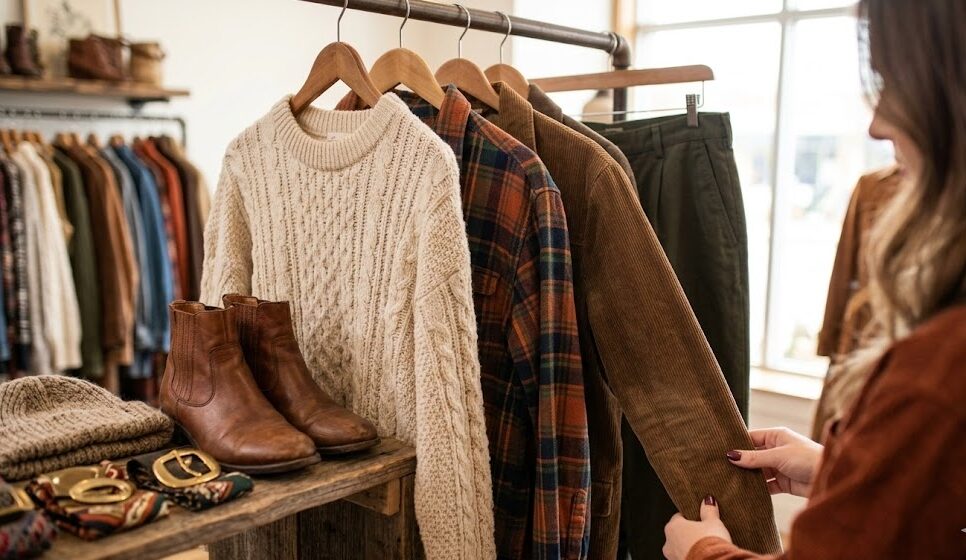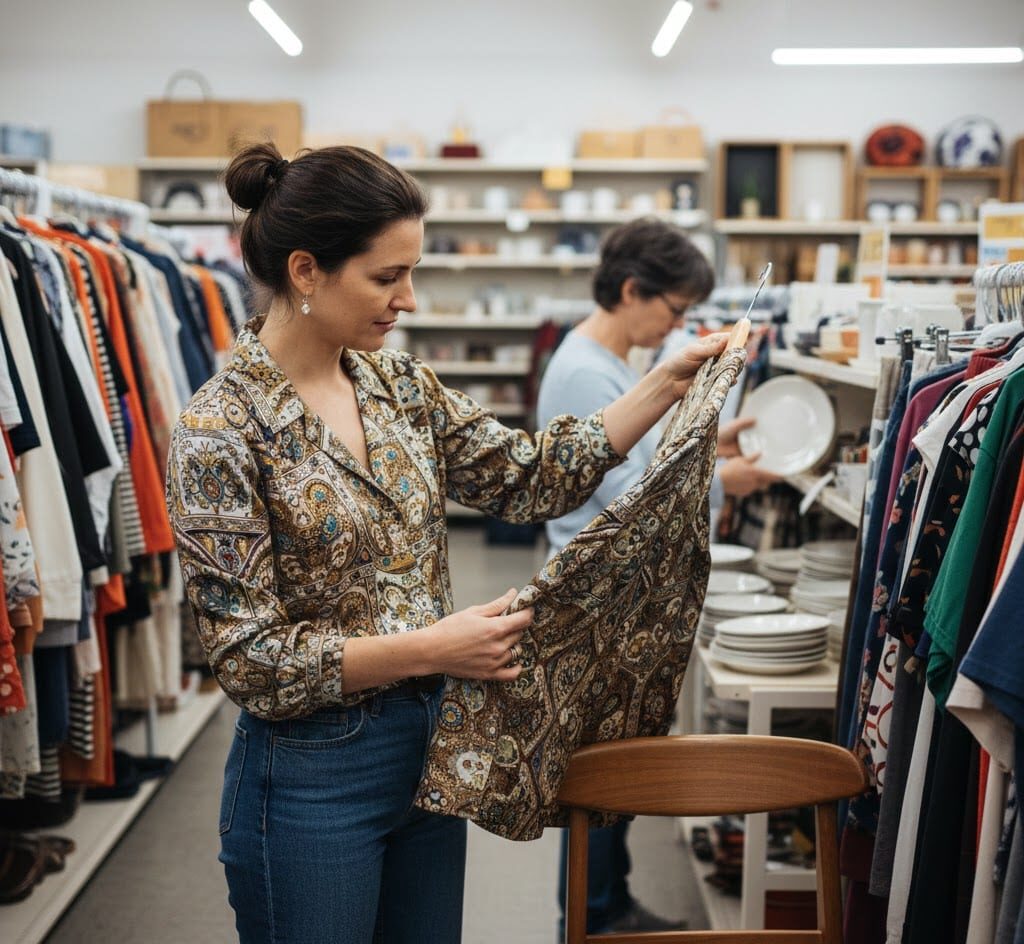
When thrift shopping, the key to finding quality items is knowing what to look for. Here’s how to make every trip a success:
- Focus on materials: Choose natural fibers such as wool, cotton, or leather for clothing, and solid wood or cast iron for furniture. These materials last longer and feel better.
- Inspect construction: Look for tight stitching, sturdy joints, and smooth finishes. Avoid wobbly furniture or poorly sewn garments.
- Check condition: Minor flaws, such as a missing button or light scratches, can be fixed, but avoid items with deep cracks, heavy stains, or odors.
- Use your senses: Feel for weight and texture, look for maker’s marks, and listen for a clear ring in crystal glassware.
- Research value: Use your phone to verify brands and resale prices to ensure you’re getting a good deal.
Thrifting isn’t just about saving money – it’s a way to find durable, stylish pieces while reducing waste. Start in high-value sections like coats, leather goods, and solid-wood furniture, and follow these steps to shop with confidence.
Basic Principles for Spotting Quality Items
What to Look for in Any Item
The materials tell the story. Whether you’re checking out a sweater, a dining chair, or a glass vase, the material quality is your first clue. In clothing, natural fibers like wool, cashmere, silk, linen, and thick cotton feel smooth and substantial, unlike synthetic fabrics that often feel flimsy. For furniture, solid wood has a visible grain and a hefty weight, while particleboard tends to feel lightweight and hollow. Crystal pieces have a distinctive ring when tapped, unlike ordinary glass. Durable materials like cast iron, stainless steel, and genuine leather also signal long-lasting quality.
Construction is your durability indicator. Look closely at how the item is put together. Tight, even stitching without loose threads is a hallmark of well-made clothing. For furniture, joints should fit snugly – traditional techniques like dovetail or mortise-and-tenon are excellent signs. Drawers should glide smoothly, and seams should align perfectly. Even the undersides of items can reveal the level of craftsmanship.
Your hands and eyes are your best tools. Heavier items often indicate better construction, whether it’s solid wood, dense wool, or cast iron. Run your hand over fabrics or surfaces – quality textiles feel smooth and weighty, while natural wood has subtle texture variations that plastic veneers lack. Use good lighting to check for flaws like loose threads, chips, cracks, pilling, or fading.
Look for brand marks and maker’s stamps. Flip furniture over, check garment labels, and inspect ceramics or glass for etched logos or stamps. Recognizable brands, numbered art prints, and clear maker’s marks often point to higher quality and better resale value. If you come across an unfamiliar label, a quick internet search can help you figure out if you’ve found a gem or something less desirable.
Condition is everything. Pay close attention to high-wear areas. For clothing, inspect collars, cuffs, and underarms. For furniture, check corners, legs, and drawer interiors. Look for stains, cracks, missing pieces, or lingering odors. Some issues, like a missing button or a light scratch, can be fixed easily. But major problems – like a wobbly frame, deep cracks, or mildew – are usually not worth the trouble.
These principles lay the groundwork for a thorough and efficient inspection process.
5-Step Item Inspection Process
To apply these principles, follow a straightforward 5-step inspection process. This method keeps your evaluations consistent and efficient, whether you’re eyeing a $5 shirt or a $50 dresser:
- Give it a quick scan. Take 5–10 seconds to examine the item from all angles. Look for obvious issues like stains, chips, missing parts, or warping. If something doesn’t meet your quality standards right away, set it aside.
- Check the materials. Look for fabric tags on clothing, inspect the underside of furniture, or check the base of housewares. Prioritize materials like solid wood, natural fibers, crystal, stainless steel, and cast iron over cheaper alternatives like particleboard, bonded leather, or synthetic fabrics.
- Inspect the craftsmanship. Examine seams, stitching, joints, hardware, and finishes. High-quality items will have even stitches, smooth-gliding drawers, and sturdy joints. For clothing, turn items inside out to check seam finishes and lining quality. For furniture, open every drawer and gently test the stability of legs and joints.
- Evaluate the condition. Focus on areas that show wear, like elbows and knees on clothing or seat cushions and corners on furniture. Look for damage, odors, or structural issues. Decide if minor flaws are worth fixing or if major problems make the item a no-go.
- Research the value. If you’re unsure about a brand or maker’s mark, use your smartphone to look it up on the spot. Check for authenticity, recent resale prices, and whether the thrift store price is a good deal.
For example, when inspecting a wool coat, look for moth holes and discoloration, confirm the fabric tag lists natural fibers, and check seams and wear-prone areas like cuffs. For a wooden dining chair, stability test, inspect the material underneath, and ensure the joints are secure.
Build Your Own Shopping Checklist
To make your thrift store trips even more efficient, create a personalized checklist based on the inspection steps above. A simple note on your phone, divided into “Yes”, “No”, and “Fixable” categories, can keep you focused.
- Your “Yes” List: Jot down preferred materials, trusted brands, and styles that align with your standards. For clothing, include fabrics like wool, cashmere, silk, and thick denim. For furniture, focus on solid wood or quality plywood with real metal hardware. For housewares, look for crystal, stainless steel, or cast iron. Tailor this list to your personal style and needs.
- Your “No” List: Identify dealbreakers like wobbly frames, cracks, broken closures, extensive stains, or major structural issues. Items with these flaws are usually best left behind unless you’re confident in your ability to repair them.
- Your “Fixable” List: Note minor flaws you can easily address, such as a missing button, a loose hem, light pilling, or small scratches. For instance, if you find a pair of pants for $8 but need to pay $15 for hemming, it could still be a great deal compared to the retail price of $60.
This checklist not only speeds up your decision-making but also helps you consistently spot quality items. Whether you’re browsing your local thrift store or shopping at a trusted spot like Red Racks Thrift Stores, this approach ensures every item you bring home adds real value to your wardrobe or home.
Checking Clothing, Shoes, and Accessories
Clothing and Outerwear
Start with the fabric. The feel of the fabric can tell you a lot about its quality. High-quality cotton should feel crisp and sturdy, while wool should be soft, dense, and have a slight spring when pressed. Linen often has natural “slubs” in its texture, and silk should drape smoothly and feel luxurious. When handling any garment, gently pull the fabric to see if it snaps back into shape. If it stays stretched, the weave may not be up to par.
Inspect the garment inside out. Look for tight, even stitching without any loose threads. High-quality pieces will have flat seams that are reinforced at stress points like shoulders and armholes. Lined garments, especially jackets and coats, often indicate better craftsmanship and durability. Pay close attention to seams, zippers, and button attachments to ensure they are well-made and securely fastened.
Alterations can make a difference. Sometimes, a great find just needs a little tailoring. For example, a $10 wool blazer with solid stitching could be transformed into a high-end piece with minor adjustments. Prioritize items with good proportions and strong fabric that hangs well. However, avoid garments with stretched seams, thinning material, or heavy pilling under the arms – these issues usually can’t be fixed, even with alterations.
Once you’ve reviewed clothing, it’s time to evaluate accessories, where material quality and construction are equally important.
Shoes, Bags, and Leather Items
When assessing leather goods, many of the same principles for clothing apply.
Genuine leather stands out. Real leather has a unique feel and smell. It should feel supple, have a slightly irregular grain, and absorb a drop of water – a quality faux leather lacks. Press the leather gently; it should wrinkle slightly and then return to its original shape. In general, heavier shoes or bags often indicate better materials and craftsmanship.
Some flaws add character, others don’t. Minor scuffs or creases on leather can often be polished out and may even enhance the item’s character over time. Slight sole wear on shoes is acceptable as long as the overall structure and stitching remain intact. On the other hand, avoid items with cracked stitching, separated soles, or a strong musty odor, as these could point to mold or water damage. If you notice peeling or delaminating on faux leather, it’s likely the item is nearing the end of its usable life.
Reading Labels and Verifying Brands
After a physical inspection, checking labels is a crucial step in confirming quality and authenticity.
Fabric content tags provide essential clues. Look for natural fibers like 100% cotton, wool, silk, linen, merino, or cashmere. Care instructions can also hint at quality – garments that require gentle washing or dry cleaning are often made from more delicate, high-end materials. The country of origin matters, too. Items marked “Made in USA”, “Made in Italy”, or “Made in Japan” are often associated with higher standards of craftsmanship. Vintage pieces with sewn-in fabric tags, rather than printed ones, are usually from periods when quality was a bigger focus.
Use technology to confirm authenticity. Look for maker’s marks, stamps, or etched labels hidden in seams or tags. Apps like Google Lens can help you match labels to authentic examples and even estimate an item’s age and value. Authentic pieces often have clear identifying marks, such as logos or detailed fabric tags. Be cautious with items claiming to be designer but missing these identifiers – if you can’t verify their authenticity, it’s better to move on.
Checking Furniture, Housewares, and Decor
Expand your checklist by using these specific tips to evaluate furniture, home décor, and household items.
Furniture and Large Items
Start with the edges and undersides.
Solid wood furniture reveals a natural grain on every side, while particle board often shows a pressed, crumbly texture at screw holes or chipped edges. Solid wood also feels significantly heavier than flat-pack furniture of a similar size.
Put the piece to the test.
Sit on chairs, lean on tables, and gently rock them to check for wobbling or creaking. Fully extend drawers – well-made ones often feature dovetail joints, ensuring they slide smoothly without sticking or falling out. Open and close doors to confirm that hinges are aligned and working properly. Use your phone’s flashlight to spot cracks, water stains, or warping. While minor scratches are usually fine, deep cracks, swollen wood, or significant warping could mean expensive repairs.
Inspect the finish and upholstery.
A smooth finish and tightly secured upholstery are signs of quality. Watch out for deep gouges or persistent odors like smoke, mildew, or pet smells. For upholstered furniture, press down on the cushions and listen for squeaks or crunching, which might indicate broken springs. Check seams for even stitching and edges for fraying.
Know when to walk away.
Avoid furniture with cracked load-bearing parts, severely loose legs that can’t be tightened, or frames that twist when pushed. Dark, spreading stains, soft particle board, or musty odors often indicate moisture damage that could worsen over time. For upholstered pieces, signs of pests – such as tiny black specks or widespread staining – are deal-breakers.
Once you’ve tackled large furniture, it’s time to shift your focus to smaller household items. Here’s how to assess kitchenware, glass, and collectibles.
Kitchenware, Glass, and Collectibles
Use the same sharp eye you applied to furniture – pay attention to weight, material, and finish to spot quality in these smaller items.
Weight and material tell a story.
High-quality stainless steel cookware feels heavy and often has a multi-ply core, which helps it resist warping. Cast iron should have a smooth cooking surface without deep rust or cracks. For enameled cast iron, avoid pieces with large chips exposing the metal, as these can deteriorate further. Nonstick pans with peeling or deep scratches should also be skipped since damaged coatings can pose safety concerns.
Crystal and fine glass stand out.
Crystal is heavier than regular glass of the same size and produces a clear, bell-like sound when tapped lightly with your fingernail. Ordinary glass, on the other hand, gives a duller sound. High-quality cut glass displays sharp, precise facets and consistent patterns, while lower-quality glass often has soft or blurred edges. Run your fingers along rims and handles to check for chips, and hold pieces up to the light to spot hairline cracks that could weaken them.
Look for maker’s marks on collectibles.
Authentic collectibles often feature etched, embossed, or printed maker’s marks on the base, signaling better craftsmanship and materials. Brands like Drexel Heritage and Henredon for furniture or Murano and Steuben for glassware are worth noting. If you encounter unfamiliar marks, take a photo and use a visual search tool to research the maker and estimate the item’s value. Whether you’re browsing at Red Racks Thrift Stores or similar shops, these details can help you uncover high-quality treasures among the mix.
Smart Shopping Tips for Thrift Stores
Here are some practical strategies to help you shop smarter and get more value from your thrift store visits.
Start with High-Value Sections
Focus your attention on high-value areas like coats, denim, leather goods, and solid-wood furniture. These premium items often retail for hundreds of dollars but can cost as little as $5–$50 at thrift stores. For example, a cashmere coat that originally sold for $300 might be priced at just $25, or premium-brand jeans that retail for $150 could be yours for $12. Keep a tape measure handy to check dimensions, and use your smartphone to research brands and verify prices. Before buying, consider whether the low cost justifies any potential repair expenses.
Balancing Price and Quality
Once you’ve identified something worth considering, evaluate its value using a simple formula: (Retail Value – Repair Cost) ÷ Thrift Price. If the result is higher than 10, it’s likely a good deal. For instance, a $300 wool coat priced at $25 with a $10 stitching repair gives you a ratio of about 11 – definitely worth buying. On the other hand, a synthetic coat with pilling priced at $30 probably isn’t worth it, as its quality issues outweigh the savings. Use your phone to check resale values and compare them to the thrift price. For everyday basics, if the thrift price is close to what you’d pay for a discounted new item and the condition is just average, it’s better to skip it.
What You Can Fix and What to Avoid
Be open to minor repairs that are quick and affordable – think loose buttons, small seam splits, light stains, or scuffed leather. Fixes that take less than 15 minutes and cost under $5 can turn items like a $12 cotton shirt with a washable stain or a $20 leather belt with minor scuffs into great finds.
However, steer clear of items with serious issues such as mold, musty odors, exposed wiring, broken structures, or deep cracks. These problems often pose safety or health risks and aren’t worth the investment. For example, avoid furniture with wobbly joints that can’t be tightened, lamps with frayed cords, or kitchenware with mold spots that won’t come clean. Deep cracks in furniture or large chips in enameled cookware that expose the metal underneath are likely to worsen over time. As a rule of thumb, if repair costs exceed 10% of the item’s retail value or require professional help, it’s best to leave it behind.
Stores like Red Racks Thrift Stores in Missouri offer a curated selection of high-value items, making it easier to apply these strategies. With careful shopping, you can score quality deals while supporting a veteran-owned business. By combining these tips with thorough quality checks, you’ll ensure that every thrift store find is a true asset to your home or wardrobe.
Conclusion
Scoring quality finds at thrift stores comes down to five key habits: start by checking materials like solid wood, natural fibers, or genuine leather; inspect construction and stitching for durability; look for visible damage; read labels and maker’s marks; and stick to a consistent checklist every time you shop. You don’t need to be an expert – just take the time to feel fabrics, test seams and joints, and closely examine items that catch your eye. With practice, recognizing quality becomes second nature.
These habits do more than just lead to better purchases – they bring a variety of benefits. Shopping secondhand can save you serious money. For example, a $200 item might cost just $25–$40 at a thrift store, offering incredible value and longevity. Plus, buying used helps keep furniture, clothing, and household goods out of landfills, reducing the demand for new production. And let’s not forget the charm of vintage finds – mid-century furniture, Art Deco glassware, or premium-brand clothing – that can elevate your home and wardrobe without breaking the bank.
When thrifting, compare the price to the item’s original value, factor in repair costs if needed, and avoid anything with major cracks, structural issues, or stains that won’t come out. Bring a checklist to guide your decisions, focusing on material, construction, condition, brand, and fit. Start in high-value sections like coats, shoes, bags, furniture, and kitchenware, where it’s easier to spot quality differences. By following a consistent inspection process, you’ll shop with confidence and avoid rushed decisions.
Shopping thoughtfully not only enhances your experience but also makes a positive impact. Thrifting at places like Red Racks Thrift Stores ensures you’re not only finding great deals but also supporting veterans and local communities. As a veteran-owned organization, Red Racks has been backing Disabled American Veterans since 1958. They offer affordable prices on donated clothing, home goods, and unique treasures while reinvesting proceeds into veteran services and local job creation. Even unsold items are recycled to keep usable materials out of landfills. Every quality item you bring home benefits your wallet and your community, making thrift shopping a sustainable and rewarding habit to cultivate.
FAQs
What fabrics should I look for when shopping for quality clothing at a thrift store?
When shopping for clothes at thrift stores, keep an eye out for natural fabrics such as cotton, wool, silk, and linen. These materials are prized for their longevity, comfort, and classic style. Plus, they often improve with age and make it easier to spot quality stitching or signs of wear.
Meanwhile, synthetic fabrics like polyester or nylon deserve a bit more scrutiny. They tend to break down quicker and might not stand the test of time as well. Sticking to natural fibers is a smart way to score pieces that are both fashionable and built to last.
What’s the best way to check the quality of furniture at a thrift store?
When examining a piece, begin by checking its sturdiness – give it a light shake to see if it wobbles or has loose joints. Carefully inspect the legs, corners, and surfaces for any cracks, splinters, or other noticeable damage. Test any drawers or hinges by opening and closing them to ensure they function smoothly without sticking. Lastly, assess the finish for uniformity, keeping an eye out for scratches or dents, which can reveal how well the item has been cared for.
What small flaws in thrift store finds are worth repairing?
Small issues such as loose buttons, tiny tears, worn hems, or scratched surfaces are often simple to repair and can significantly improve an item’s appearance and lifespan. Replacing missing hardware, like a drawer knob or a zipper pull, is usually affordable and straightforward. With a bit of effort, you can transform these items into long-lasting gems without straining your wallet.