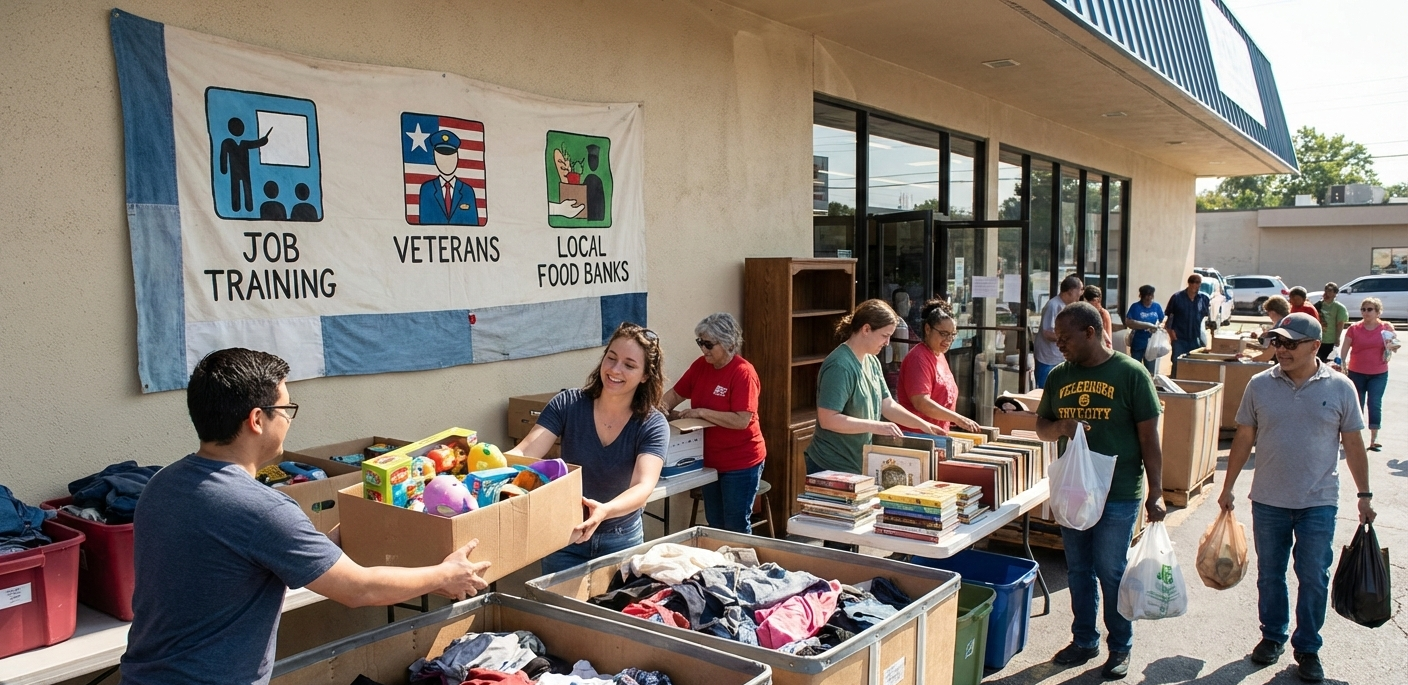
Thrift stores do more than sell secondhand items – they transform donations into resources that address social issues. By collecting and reselling goods, these stores reduce waste and fund programs like job training, veteran support, and local charity initiatives. Here’s what you need to know:
- Red Racks Thrift Stores: Supports veterans through 12 Missouri locations. Proceeds fund programs for Disabled American Veterans, while unsold items are recycled to reduce textile waste.
- Goodwill: Processes 5.7 billion pounds of donations annually, using 81% of revenue for job training and employment services. Its large-scale operations help combat waste while supporting career development.
- America’s Thrift Stores: Partners with six charities across five states, creating jobs and aiming to contribute $100 million to charity over ten years.
Thrift stores not only provide affordable shopping but also help divert over 11 million tons of textile waste from landfills each year. Whether you’re donating or shopping, your contributions support local communities while promoting reuse and waste reduction.
1. Red Racks Thrift Stores
Red Racks Thrift Stores, a veteran-owned organization, operates 12 locations across Missouri, including Kansas City, Joplin, Springfield, Lee’s Summit, Independence, Blue Springs, and St. Joseph. What sets Red Racks apart is its mission: turning donations into resources that support Disabled American Veterans and strengthen local communities throughout the state.
Donation Processing
Red Racks makes donating easy with daily hours from 9:00 AM to 9:00 PM, giving donors the flexibility to contribute at their convenience. They accept a wide range of items – clothing, toys, household goods, and even unique finds – adding to the thrill of thrift shopping.
Donations go through a careful process. Trained staff inspect each item to ensure only clean, usable goods make it to the sales floor, while unsellable items are recycled to minimize textile waste. This thoughtful system ensures every donation is used effectively, either by providing affordable goods or through recycling efforts.
Revenue Allocation
The revenue generated from sales at Red Racks supports impactful initiatives. As a 501(c) organization owned by Disabled American Veterans, the proceeds directly benefit veteran programs and community development.
This veteran-owned structure prioritizes funding for Disabled American Veterans, creating programs and job opportunities that support both individuals and the broader community. Every purchase at Red Racks helps fuel these efforts, turning thrift shopping into a meaningful way to give back.
Community Impact
Red Racks plays an important role in the community in several ways. Its 12 stores offer affordable shopping options for families, helping ease financial burdens while generating funds for charitable programs. Beyond affordability, their commitment to recycling unsold items helps tackle the staggering 11 million tons of textile waste produced annually in the United States.
Additionally, Red Racks provides employment opportunities with benefits and room for growth. These jobs not only support the organization’s operations but also offer economic mobility for employees. By combining veteran support, community assistance, and environmental responsibility, Red Racks shows how thrift stores can make a meaningful difference on multiple levels.
2. Goodwill
In 2021, Goodwill handled an impressive 107 million donations, amounting to 5.7 billion pounds of goods. These donations were used to fund community-focused job training programs. Instead of targeting specific groups, Goodwill leverages its large-scale operations to provide broad support across communities.
Donation Processing
Every item donated to Goodwill goes through a detailed process. Items are inspected, sorted by type and size, and priced based on their condition and demand. This ensures they’re ready for resale at competitive prices. Items that don’t meet quality standards are sent to recycling partners, aligning with Goodwill’s commitment to reducing waste. The stores are carefully organized by staff to create an inviting shopping experience, which helps maximize revenue from sales. This streamlined system allows Goodwill to make the most out of every donation.
Revenue Allocation
Goodwill uses about 81% of its sales revenue to fund job training and employment support services. These funds are directed toward programs that help individuals overcome barriers to employment, offering resources for career development and job placement. By turning donated items into funding for these initiatives, Goodwill creates a clear connection between community contributions and real opportunities for people seeking to improve their livelihoods.
Community Impact
Goodwill’s efforts go beyond just retail. The organization plays a key role in workforce development, provides affordable shopping options, and significantly reduces waste. Americans discard about 13 million tons of clothing each year, with more than 11 million tons ending up in landfills. Goodwill helps combat this by accepting, processing, and reselling donated goods, extending the lifespan of consumer items, and keeping them out of landfills. Additionally, Goodwill has carved out a strong position in the growing secondhand market, which is projected to grow 11 times faster than traditional retail by 2028. This trend not only supports sustainable shopping but also allows Goodwill to expand its reach and impact as more consumers embrace eco-friendly practices.
3. America’s Thrift Stores
America’s Thrift Stores collaborates with six charities across five states, turning donations into meaningful support for local communities.
How Donations Are Handled
Donated items are collected and processed efficiently through their retail locations. Staff members carefully sort and price these items to ensure they meet quality standards before being sold. This approach not only maximizes the value of each donation but also ensures that shoppers have access to well-maintained goods.
Where the Money Goes
The organization has set an ambitious goal: to generate $100 million in sales revenue for its charity partners over ten years. These funds are allocated to various initiatives, supporting both local employment and community programs.
Making a Difference Locally
With over 1,500 jobs created, America’s Thrift Stores demonstrates its dedication to boosting local economies. Their efforts are evident in the jobs they provide and the financial assistance they deliver to their charity partners, making a tangible impact on the communities they serve.
Comparison of Strengths and Weaknesses
Thrift store models each have their own strengths and hurdles when it comes to turning donations into meaningful community contributions. Let’s break down the key advantages and limitations of some well-known models.
Red Racks Thrift Stores stands out for its clear and focused mission. As a veteran-owned organization, it channels revenue from donated goods directly into programs supporting Disabled American Veterans and local community initiatives. With 12 locations in Missouri, it not only provides local jobs but also recycles unsold items, contributing to environmental efforts. However, its narrow focus on veterans means it doesn’t address broader community needs, and details about how funds are allocated remain somewhat vague.
Goodwill, on the other hand, excels in operational scale. Its massive logistics network processes donations efficiently, supporting job training programs and other initiatives. For example, Goodwill processes an impressive 5.7 billion pounds of donations annually. But this large-scale operation can sometimes feel disconnected from local communities, and high overhead costs may reduce the percentage of revenue that directly benefits community programs.
America’s Thrift Stores takes a different approach, partnering with multiple charities to spread its impact across various causes. While this model aims to benefit diverse initiatives, it lacks transparency around revenue allocation and job creation metrics. Additionally, coordinating with multiple charity partners can add complexity and may dilute the focus on any single cause.
Here’s a side-by-side comparison:
| Aspect | Red Racks Thrift Stores | Goodwill | America’s Thrift Stores |
|---|---|---|---|
| Mission Focus | Support for veterans and local communities | Tackling employment barriers | Broad support through a multi-charity model |
| Scale & Efficiency | Strong local presence in Missouri | Large-scale operations (5.7 billion lbs processed annually) | Regional operations across multiple states |
| Community Impact | Directly supports veterans and creates local jobs | Job training and broader community programs | Job opportunities, though the specifics are unclear |
| Revenue Transparency | Limited public details on fund allocation | Established reporting systems, but spread across regions | Revenue use is not clearly outlined |
The role of thrift stores in reducing waste is significant. They help divert over 11 million tons of clothing from landfills annually, all while the secondhand market grows 11 times faster than traditional retail.
When it comes to funding, thrift stores have options beyond retail sales. They can tap into community development block grants, foundation grants (ranging from $500 to $2 million), and grants supporting environmental initiatives. For instance, Red Racks’ veteran-focused mission aligns well with foundations that fund economic mobility programs. Meanwhile, larger organizations like Goodwill can use their scale to secure substantial multiyear grants, opening doors to even greater opportunities.
Conclusion
Thrift store models turn donations into meaningful community initiatives, each with its own unique focus. Red Racks Thrift Stores, for instance, showcases how a veteran-owned organization can make a direct impact by channeling donations to support Disabled American Veterans and local Missouri communities. With just 12 locations, their mission-driven approach proves that even smaller-scale efforts can create significant change.
Goodwill, on the other hand, operates on a massive scale, processing 5.7 billion pounds of items annually and directing 81% of its revenues toward job training programs. Similarly, America’s Thrift Stores partners with charities to create employment opportunities and aims to contribute $100 million over a decade. These organizations not only drive social initiatives but also play a role in reducing waste.
The environmental benefits of thrift stores are immense. By addressing textile waste, they give items a second life while funding community programs. This combination of waste reduction and community support makes thrift stores especially relevant in a world increasingly focused on sustainability.
When donating, consider choosing organizations whose missions align with your values. Whether you’re passionate about veteran support, job training, environmental efforts, or broader community assistance, there’s likely a thrift store model that matches your priorities.
Donating gently used, clean items is an easy way to contribute to these causes. Organizations with clear, transparent missions ensure that your donations directly fund essential community programs. By supporting thrift stores with well-communicated goals, your contributions help bridge the gap between donated goods and impactful community change.
FAQs
How do Red Racks Thrift Stores help reduce waste and promote sustainability?
Red Racks Thrift Stores make a big difference in cutting down waste and promoting eco-friendly practices by giving donated items a second chance. They welcome gently used clothing, toys, and other household goods from the community, ensuring these items find new homes instead of being tossed into landfills.
Even when items don’t sell, Red Racks takes steps to recycle them whenever possible, reducing waste and extending their usefulness. Plus, by providing budget-friendly shopping options, they help promote responsible buying habits, making it easier for people to shop with care while also supporting their local neighborhoods.
How do thrift store sales help support community programs and initiatives?
Revenue generated by Red Racks Thrift Stores is a key contributor to supporting Disabled American Veterans and various local community initiatives. This funding helps create job opportunities with room for advancement, supports recycling efforts by giving unsold items a second life, and provides affordable shopping options that benefit the community.
Through donations and the repurposing of goods, Red Racks Thrift Stores extend their impact beyond just retail, driving positive change and making a lasting difference in the neighborhoods they serve.
How can I make sure my donations to thrift stores truly help the community?
When donating, aim to give gently used or new items that are clean and in good shape. This helps ensure the items can be resold, generating funds for impactful community projects.
By donating to Red Racks Thrift Stores, you’re directly supporting Disabled American Veterans and various local programs. Plus, the stores emphasize sustainability by recycling unsold items and offering affordable shopping options to the community. Donations are accepted daily from 9:00 AM to 9:00 PM, making it convenient to give back and make a difference.