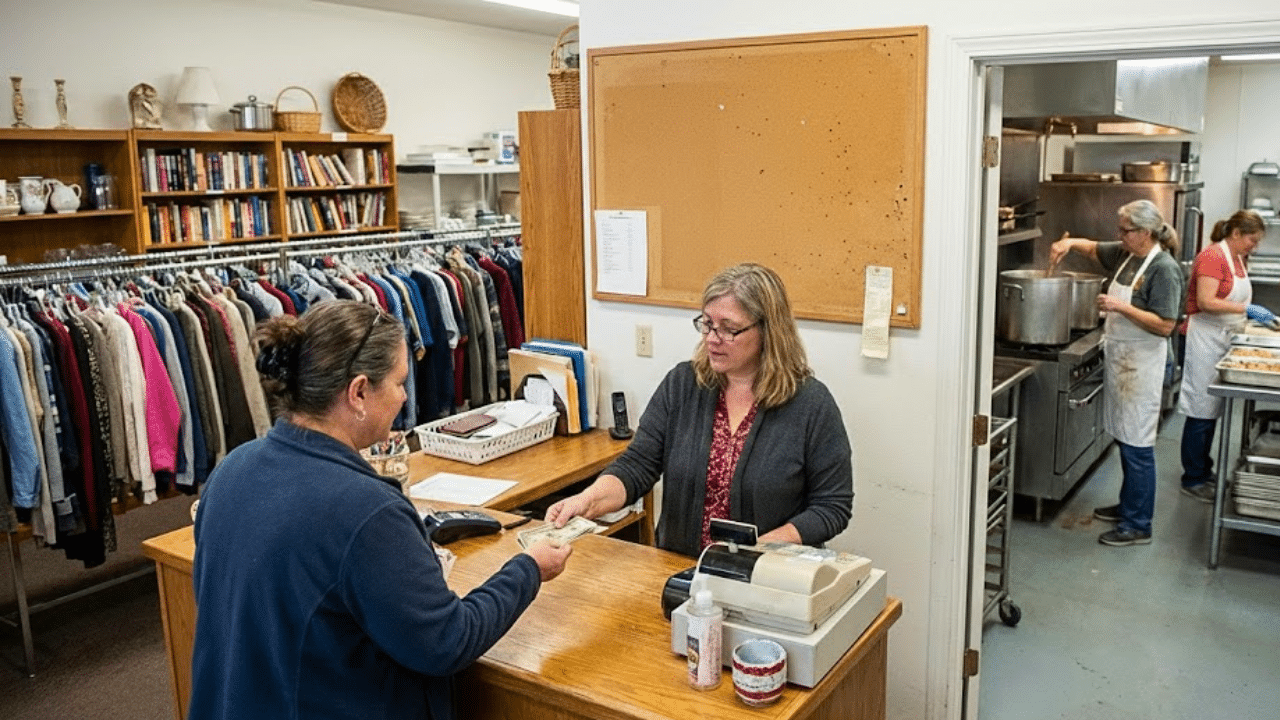
Food insecurity affects 36% of U.S. households, leaving millions struggling to afford basic needs. With rising food costs and reduced government aid, nonprofits are turning to thrift stores as a practical funding solution for meal programs. By selling donated items, these stores generate revenue to support food assistance, while also offering affordable shopping options to local communities.
Key takeaways:
- Thrift stores generate $13 billion annually, much of which supports charities.
- Nonprofits like Martha’s Table use thrift store sales to fund food programs, with every $1 earned translating into $2.34 worth of food distributed.
- Families benefit indirectly by saving on essentials, freeing up more money for groceries.
This model not only funds meals but also reduces waste, creates jobs, and strengthens local economies. Organizations like Red Racks Thrift Stores in Missouri exemplify this by supporting veterans and food programs through thrift store revenue and recycling efforts.
How Thrift Store Revenue Funds Meal Programs
The journey of donated items turning into meals for families in need highlights the tangible impact of thrift store operations. By sorting, processing, and managing donations, these stores generate funds that directly support meal programs. Here’s how each step connects donations to food assistance.
From Donation to Sale: The Revenue Process
It all starts when community members donate items like clothing, household goods, and toys. Staff and volunteers carefully sort through these donations, selecting quality items for sale while diverting unsellable goods to recycling or disposal. This ensures that only the best merchandise reaches the sales floor.
Once sorted, items are cleaned, inspected, and priced according to their condition, brand, and local market demand. This systematic pricing approach helps maintain a steady revenue stream to fund charitable programs.
Before funds can be directed to meal programs, thrift stores first cover essential operating costs such as rent, utilities, wages, and inventory management. Many stores, like Red Racks Thrift Stores in Missouri, also run recycling programs to generate additional income from unsold items. This strategy maximizes the value of every donation while keeping administrative costs for food programs low.
How Proceeds Are Directed to Food Programs
After covering operational expenses, thrift stores allocate their earnings to meal programs through structured financial processes that prioritize transparency and accountability. Many nonprofit stores follow predetermined models, dedicating a set percentage of net profits to specific charitable initiatives.
For instance, Martha’s Table uses proceeds from its Martha’s Outfitters thrift store to fund its Pantry Day program. This initiative provides free bags of food to families with very low incomes. By managing both the thrift store and food distribution under one structure, the organization streamlines fund allocation and reduces administrative overhead.
To ensure sustainability, regular financial reviews balance current needs with future goals. With food banks now spending about 30% more on food due to inflation, thrift store revenue has become an increasingly critical funding source. Some stores also enhance their contributions through customer-driven efforts like roundup donation programs, where shoppers can round up their purchase totals to support charitable causes.
Beyond purchasing food, thrift store earnings also cover related costs, such as transportation, soup kitchen operations, and staffing for food pantries. These funds ensure meal programs receive consistent support. Detailed financial records and annual impact reports further demonstrate how funds are generated and allocated, building trust within the community.
Red Racks Thrift Stores, with 12 locations across Missouri, exemplify how thrift store operations can address multiple community needs. Their veteran-owned model channels revenue from donated item sales to support Disabled American Veterans and local programs, including food security initiatives. Effective recycling programs and dedicated funding channels amplify their impact.
Through these interconnected processes, community donations are transformed into a reliable funding source for meal assistance programs, adapting to rising costs and consistently helping families facing hunger.
Measured Outcomes of Thrift Store-Funded Meal Programs
When thrift stores allocate their profits to meal assistance programs, the impact is tangible and transformative for communities nationwide. These outcomes highlight how thrift store sales can be effectively turned into food security efforts, showcasing the direct link between donated items and hunger relief for families in need.
Meals Provided and Households Served
The connection between thrift store earnings and meal assistance is evident in the numbers. For instance, the Kiwanis Club of Ann Arbor reported generating over $2 million in thrift store sales during the fiscal year ending April 2025, with the proceeds supporting both nutrition and educational programs.
A key factor in the success of these programs is the multiplier effect achieved through strategic partnerships. Research from Martha’s Table revealed that every dollar earned through thrift store sales could translate into $2.34 worth of food distributed. This efficiency is backed by meticulous tracking of meals provided and households served. Many nonprofits leverage thrift store revenue to buy food in bulk from local food banks, stretching each dollar further. This data-driven approach not only ensures transparency but also helps organizations adapt to meet the evolving needs of their communities.
How Affordable Shopping Increases Food Budgets
Thrift store sales do more than directly fund meal programs – they also indirectly help families stretch their food budgets. By purchasing clothing, furniture, and household goods at thrift stores rather than paying full retail prices, families can redirect those savings toward essential groceries.
This benefit is particularly crucial given that food insecurity affects 36% of U.S. households. With food banks facing a 30% increase in food purchase costs compared to the previous year, every dollar saved on non-food essentials becomes even more critical for households trying to make ends meet. For families already relying on meal assistance, these savings contribute to financial stability and reduce the need for emergency food support.
Community Strengthening Through Food Security
Thrift store-funded meal programs create a ripple effect that strengthens entire communities. Reliable access to nutritious food improves educational outcomes, enhances health, and fosters greater community stability. These improvements build stronger neighborhoods where residents can focus on long-term goals, such as economic growth and overall well-being.
Additionally, thrift stores provide a steady and adaptable revenue stream for meal programs. Unlike grant funding, which can fluctuate, consistent thrift store sales allow organizations to plan for the future and maintain services even during periods of high demand or funding shortfalls. This model is often seen as a “win-win” because it not only addresses hunger but also creates jobs, supports recycling efforts, and offers affordable shopping options.
In Missouri, for example, Red Racks Thrift Stores operates 12 locations that support Disabled American Veterans and other community programs. By recycling unsold items, providing affordable goods, and creating employment opportunities, Red Racks exemplifies how thrift stores can broadly enhance community well-being. While specific figures on meal program funding aren’t detailed for Red Racks, their operational model illustrates how thrift stores can contribute to food security and other vital initiatives.
The success of these programs ultimately hinges on community involvement. Every donation and purchase fuels a cycle of support that reduces hunger and strengthens neighborhoods. This collaborative effort underscores how thrift store revenue can provide lasting support for food security and build more resilient communities.
Red Racks Thrift Stores: Supporting Missouri Communities
Red Racks Thrift Stores operates 12 locations across Missouri, including key areas like Kansas City, Joplin, and Springfield. Owned and run by Disabled American Veterans (DAV), this veteran-owned organization plays a dual role: supporting veterans and uplifting local communities through affordable shopping, recycling initiatives, and job creation.
Funding for Veterans and Food Assistance
Red Racks combines its veteran-focused mission with efforts to combat food insecurity. A portion of its sales revenue helps fund essential services for Disabled American Veterans while also contributing to local food assistance programs. While veterans remain the primary focus, Red Racks’ charitable model extends its impact by providing resources to address food insecurity. The effectiveness of this approach is evident in similar initiatives. For example, the Global FoodBanking Network reports that every $1 donated can provide an average of 14 meals, highlighting how even small contributions can make a big difference for families in need.
Recycling Programs That Make a Difference
Unsold items at Red Racks Thrift Stores don’t go to waste – they’re processed through recycling programs that serve a dual purpose. These programs reduce landfill waste and generate additional revenue by recycling items like clothing, textiles, and household goods. The funds raised through these efforts are reinvested into charitable programs, supporting both veteran services and food assistance. This recycling initiative not only benefits the environment but also strengthens the store’s ability to give back to the community, all while creating local jobs.
Employment Opportunities That Strengthen Communities
Red Racks Thrift Stores provides stable jobs across Missouri, offering positions that range from retail roles to management opportunities with benefits and room for growth. These jobs help boost household incomes and contribute to economic stability, reducing the need for emergency food assistance. Beyond financial benefits, working at Red Racks allows employees to be part of a mission-driven organization that supports veterans and local neighborhoods. Additionally, affordable shopping at these stores enables families to stretch their budgets, often freeing up funds for essentials like groceries.
Conclusion
The evidence makes it clear: thrift store sales play a vital role in bolstering meal assistance programs. Research shows that revenue from thrift stores, when directed toward meal funding, creates a ripple effect of benefits. Not only does this model provide meals to those in need, but it also helps families stretch their budgets by offering affordable goods at thrift stores, easing the strain on household finances.
This impact is particularly immediate as food insecurity now affects 36% of U.S. households. With rising food prices and uncertainties surrounding government assistance programs, thrift store-funded meal initiatives have become a crucial safety net for millions of Americans.
A shining example of this approach is Red Racks Thrift Stores in Missouri. Operating through 12 locations, they channel sales revenue to support Disabled American Veterans while also contributing to local food assistance programs. Their recycling efforts create additional resources, and the jobs they provide help stabilize incomes, reducing reliance on emergency food support.
The results are tangible – meals on tables for families in need. Shopping at thrift stores funds these essential meal programs, while donating gently used items ensures a steady inventory that drives revenue for food assistance. This interconnected system not only addresses hunger but also supports veterans, creates jobs, and promotes reuse and recycling, strengthening communities on multiple fronts.
FAQs
How do thrift store sales contribute to meal assistance programs in local communities?
Thrift stores contribute significantly to meal assistance programs by turning their sales into funds that directly support these efforts. The revenue generated helps provide meals to individuals and families struggling with food insecurity, ensuring that fewer people in the community go without food.
Take Red Racks Thrift Stores, for instance. They channel their profits into local initiatives, including meal programs. When you shop at or donate to thrift stores, you’re not just snagging budget-friendly finds – you’re also helping to sustain critical services like food assistance in your community.
How do thrift store donations help fund meal assistance programs?
Thrift store donations are a key part of funding meal assistance programs. When you donate items to thrift stores, they’re sold, and the money raised goes toward providing meals for people in need.
This process does more than just help those in difficult situations – it also gives a second life to gently used items, reducing waste and encouraging sustainability. Every donation and purchase you make directly supports these community-driven efforts, making a meaningful impact right where you live.
How do thrift store sales help fund meal assistance programs?
Thrift store sales play an important role in funding meal assistance programs, turning everyday shopping into a way to support those in need. Stores like Red Racks use the proceeds from purchases to help provide meals for individuals and families, making a meaningful difference in the community.
It’s a bit like a chain reaction: the more items donated and sold, the more funds are available to support meal programs. So, whether you’re shopping for affordable finds or donating items you no longer need, you’re actively participating in a cycle of generosity that helps tackle food insecurity in your local area.