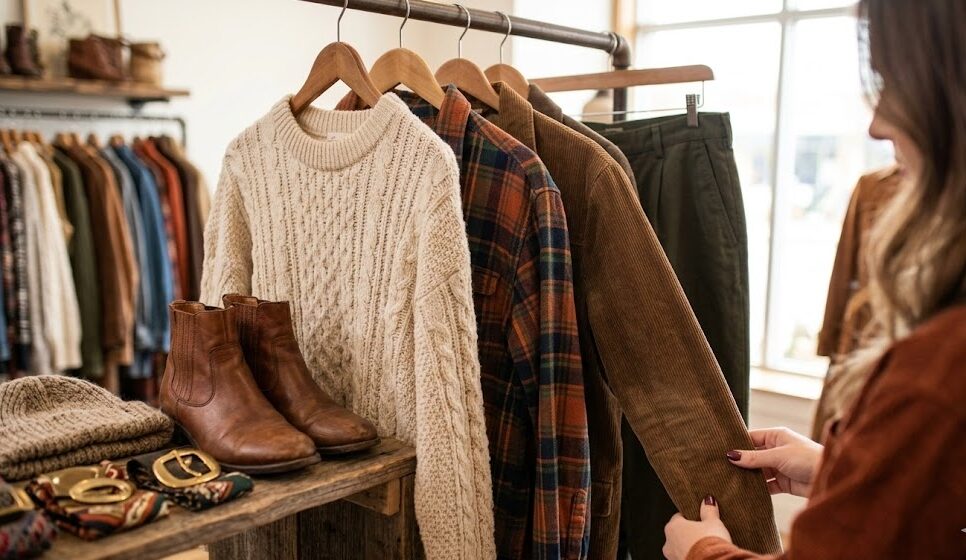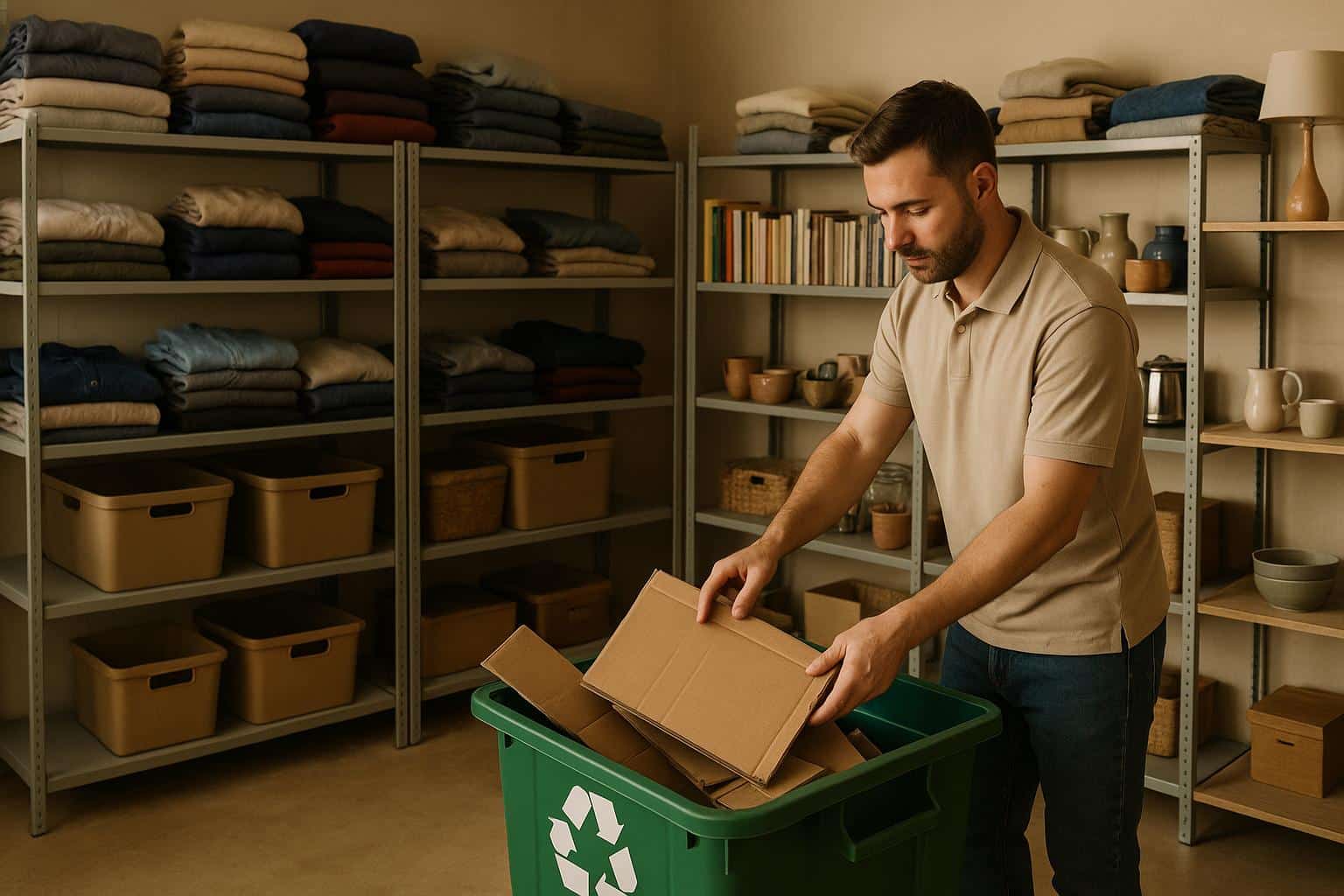
Thrift stores play a key role in reducing textile waste, but only 10–30% of donated items are sold, leaving the rest as surplus. Managing this surplus is critical to avoid contributing to landfills. Here’s how thrift stores can tackle waste effectively:
- Better Inventory Management: Sorting donations by category, condition, and value helps prioritize sellable items and reduce storage costs. Tools like point-of-sale (POS) systems and data analytics track sales trends, identify dead stock, and optimize pricing.
- Recycling and Disposal: Partnering with textile recyclers and local groups ensures unsellable items are repurposed or recycled into materials like insulation or industrial rags.
- Technology Integration: AI-powered sorting systems and digital inventory tools improve accuracy, reduce errors, and streamline operations. These innovations help track items, manage donations, and expand online sales.
- Community Impact: Thrift stores like Red Racks support local initiatives, create jobs, and provide affordable shopping options while reducing waste.
Better Inventory Management to Reduce Waste
Streamlining inventory practices not only boosts sales but also helps significantly reduce waste – an essential goal for sustainable thrift operations. By managing donations effectively, thrift stores can avoid overwhelming their storage spaces and prevent excess items from heading to landfills. The solution lies in creating systems that sort, track, and rotate inventory efficiently, ensuring more items find buyers while fewer end up discarded.
Sorting inventory by category, condition, and value is a game-changer. It accelerates sales and minimizes the storage of unsellable items. Consider this: about 12% of a retail business’s inventory typically turns into dead stock, and maintaining that dead stock can cost retailers 20–30% of its value annually in storage fees. Thrift stores, with their unique challenges, especially benefit from strategic inventory management to keep waste levels low and operations smooth.
How to Sort and Track Inventory Effectively
Sorting donations systematically right at the door is a vital first step. Donations can be grouped into categories like clothing, books, furniture, and household items, then further classified by condition, age, and potential value. This process helps identify items ready for sale while flagging those needing cleaning, repair, or alternative disposal. Rare or vintage items should be prioritized to maximize value, while heavily damaged goods can be directed to recycling or upcycling programs.
Digital tools have revolutionized inventory tracking. Modern point-of-sale (POS) systems provide real-time insights into what’s selling and what’s not. Instead of doing disruptive full-store audits, thrift stores can adopt cycle counting by category to maintain accurate records and streamline operations. Regular physical counts, reconciled with POS data, can also catch discrepancies early, ensuring smoother inventory management.
But sorting is just the beginning. Data analytics takes inventory decisions to the next level.
Using Data Analytics to Improve Inventory
Data analytics removes the guesswork from inventory management, replacing it with informed, strategic decision-making. By analyzing sales trends, stores can identify fast-moving items and spot dead stock. This data helps determine which donations to accept, how to price items, and when markdowns are necessary.
“Using data analytics and inventory management software makes it easier to keep track of inventory turnover rates and find things that aren’t selling quickly. This method is based on data, which gives thrift store owners the ability to sort products wisely.” – ThriftCart
Modern software tools can track turnover rates and flag slow-moving items, enabling flexible pricing strategies. By combining historical sales data with market trends and seasonal shifts, thrift stores can better predict demand. This insight helps fine-tune everything from donation intake to staffing and promotions. Tools like machine learning and statistical analysis are now more accessible, helping uncover patterns in sales data that might otherwise go unnoticed.
A data-driven approach also improves donation management. By identifying high-performing items, stores can focus on accepting donations that are more likely to sell, reducing the burden of unsellable goods before they even enter the system.
Though implementing these systems requires an upfront investment, the long-term benefits are clear: less waste, lower storage costs, and higher profitability. By adopting data-backed inventory practices, thrift stores can better serve their communities while reducing their environmental footprint.
Disposal and Recycling Methods
Even with the best inventory management, some items inevitably remain unsold. However, responsible disposal and recycling can turn potential waste into useful resources. Consider this: Americans discard 10.5 million tons of clothing every year, and every second, a dump truck’s worth of clothing ends up burned or in landfills. On average, each person in the U.S. throws out around 82 pounds of textiles annually. Thrift stores, with their unique position in the supply chain, can help disrupt this cycle through creative partnerships and smart programs.
The key to effective waste management lies in tailoring approaches to different materials. For example, unsellable textiles can be repurposed into products like insulation or industrial rags. Other items may find new life through recycling programs. By combining these strategies with efficient inventory practices, stores can significantly cut down on waste.
Working with Textile Recyclers and Local Groups
Partnering with textile recyclers is one of the most impactful ways to manage unsellable items, especially textiles. A good starting point is separating textiles into categories: those that can be re-worn and those that are better suited for recycling. This simple step helps stores handle waste more effectively.
“A thrift store cannot actually resell a sock with holes in it, right? But that is frequently the textiles that are coming out of homes that we are trying to get rid of. So from the operational side, we came to the conclusion that these have to be two separate streams.” – Gerrine Pan, Ridwell’s vice president of partnerships
Low-quality textiles, like those with holes or heavy wear, can be sent to recyclers who transform them into materials such as punching bag stuffing or fiber insulation. This approach not only reduces waste but also supplies industries with much-needed recycled materials.
The field of textile recycling is growing quickly. For instance, in 2024, Goodwill and Reju partnered with Waste Management to develop a regional system for collecting, sorting, reusing, and recycling textiles. Their goal is to divert more non-wearable items from landfills. Additionally, some thrift stores collaborate with local organizations to recycle unsellable clothing, turning them into new products while supporting community initiatives.
Local groups, schools, and art centers also play a role in keeping textiles out of landfills. They often welcome donations for craft projects, theater costumes, or educational programs. This not only reduces waste but also encourages creativity and learning within the community.
While external partnerships are crucial, in-house programs can take these efforts even further.
Setting Up Recycling and Upcycling Programs
External partnerships are effective, but internal initiatives can make an even bigger impact. For example, offering in-store repair services allows thrift stores to fix damaged clothing and extend its lifespan. Repairs like replacing buttons, mending tears, or hemming garments can turn items that might otherwise be discarded into sellable merchandise.
Another idea is to host upcycling workshops that teach customers how to give old clothes a new purpose. These workshops can include projects like turning t-shirts into tote bags, repurposing jeans into aprons, or creating quilts from fabric scraps. Not only do these events engage the community, but they also promote sustainable practices.
Programs like these don’t have to start big to make an impact. Leaders in creative reuse emphasize the importance of starting small and staying realistic:
“Be mindful of how you grow, be conservative, and know your limits.” – Executive Director and Founder of Spare Parts
“Determine what matters to you most. Creative reuse centers are a confluence of creativity/arts, environmental sustainability, and community. It’s hard to be good at multiple things at once, especially when starting out, so choose the one that matters most to you then blend in the others!” – Executive Director and Co-founder of Upcycle Parts Shop
The success of recycling and upcycling programs depends on clear goals, understanding available resources, and gradually building partnerships. Whether by collaborating with recyclers or launching in-house initiatives, thrift stores can reduce waste, support their communities, and make a meaningful environmental contribution.
Using Technology to Reduce Waste
Technology, particularly AI and digital systems, is transforming how donations are handled, sorted, and tracked. This shift not only reduces waste but also saves time and money. Every year, 100 million tons of textile waste are generated, with 85% of used textiles ending up in landfills or being incinerated. By adopting advanced sorting systems and digital tracking, thrift stores can significantly enhance their sustainable operations.
Automation and AI for Sorting and Recycling
AI and automation are revolutionizing textile sorting. While human sorters can achieve 95% accuracy, AI systems now match or surpass this level, working faster and more efficiently. These systems analyze garment types, materials, and fabric structures to decide whether items should be resold, recycled, or repurposed.
Take SOEX, a German company that has been developing automated textile sorting technology since 2015. Their machine learning tools, which use NIR and RGB sensors along with object recognition, achieve 95% accuracy, distinguishing 90 different natural and synthetic materials while processing up to 1,500 items per hour.
“The ability to sort textiles automatically by material and colour is an important step towards being able to recycle used textiles to a high standard in the future.” – Vittoria Troppenz, Head of Circularity at SOEX
Similarly, NewRetex in Denmark launched a fully automated sorting system in 2021. Using robots and a three-sensor system, they sort textile waste into 31 categories based on color, texture, and material composition. Their facility processes 1,500 tons of textiles annually and includes a tracking tool called ‘Huginn,’ which documents the entire journey of textiles, from collection to recycling partners.
“The traceability of textile waste is crucial for successful fibre-to-fibre recycling.” – Rikke Bech, Co-founder of NewRetex
In Belgium, Valvan developed the Fibersort system in 2011 and later introduced ‘Trimclean’ in 2020, an AI solution inspired by technology used for sorting French fries. This system uses visual data to identify and sort patches, seams, and prints on textiles.
Accessibility is improving as well. In January 2025, NIST introduced the “NIR-SORT” database, which includes molecular “fingerprints” for 64 different fabric types. This resource helps recycling centers refine their sorting processes and increase efficiency.
“AI can help make the decision-making process more accurate.” – Katarina Goodge, NIST research chemist
These advancements address a significant issue: studies show that 50% of label information on textiles is incorrect. By eliminating human error, AI-powered systems ensure textiles are sorted appropriately, whether for resale, recycling, or repurposing. And as sorting becomes more precise, digital inventory systems further streamline operations, managing stock and pricing to minimize waste across the entire process.
Digital Inventory Systems and Their Benefits
Building on the efficiencies of AI sorting, digital inventory systems offer thrift stores a powerful way to manage donations from arrival to final sale. These systems automate repetitive tasks like barcoding, data entry, and tracking, while providing real-time stock updates. This helps stores identify slow-moving inventory before it becomes waste.
Modern systems also reduce errors and keep records consistent. For example, they can track donors, generate receipts, and produce daily donation reports. Some even include features like self-service kiosks and automated online receipts, enhancing donor satisfaction.
With 93% of Americans shopping online for secondhand items and 51% of U.S. consumers expected to buy secondhand in the next five years, digital systems can integrate with eCommerce platforms to update online listings automatically. This expands a store’s reach and ensures items don’t sit idle on shelves.
These systems also address “phantom inventory” – items that appear in stock but aren’t actually available. This issue contributes to 75% of stock-outs and causes a 2.6% loss in sales. By analyzing sales patterns, AI can detect and resolve these discrepancies before they disrupt operations.
“The Propello offline function allows us to still operate even if we don’t have Internet. We’ve been able to process transactions and keep the flow of customers moving, even when the Internet was down.” – Wes Snedden, Donated Goods Regional Manager at Goodwill of Northern Wisconsin and Upper Michigan
AI-driven pricing tools analyze market trends and historical data to set optimal prices. Some stores report a 400% return on investment and save over $20,000 annually by using these systems. Smarter pricing ensures items sell faster, reducing the likelihood they’ll end up as waste.
Lastly, these technologies help stores comply with regulations and track sustainability goals. For example, the EU’s mandatory separate collection of textiles starting in 2025 will require detailed reporting. Digital systems simplify this process, ensuring compliance while supporting waste reduction efforts.
At Red Racks Thrift Stores, implementing such systems could improve tracking for donated items, enhance recycling efforts, and maintain their mission of providing affordable shopping options – all while staying committed to reducing waste and promoting sustainability.
Case Study: Red Racks Thrift Stores Waste Reduction
Red Racks Thrift Stores showcases how thoughtful waste reduction can benefit both the environment and the community. Operating across 12 locations in Missouri, the thrift store blends sustainability with its mission to support veterans, creating a model that’s both impactful and inspiring.
Recycling Practices and Community Impact
Red Racks Thrift Stores is committed to keeping donated items out of landfills. Instead of discarding unsold goods, the organization ensures all donations are either reused or properly recycled. This approach addresses a significant issue: in 2018 alone, 11.3 million tons of textiles ended up in U.S. landfills.
The store’s partnership with Disabled American Veterans (DAV) takes this mission further, using proceeds from sales to fund veteran services. Red Racks accepts donations year-round, including clothing and toys, with clear guidelines to ensure donations are clean and suitable for resale.
Beyond waste diversion, Red Racks creates local job opportunities in sorting, processing, and sales. These roles offer benefits and career growth, contributing to the economic health of the communities they serve. The steady flow of donations throughout the year ensures consistent inventory, reducing seasonal waste and maintaining a reliable recycling process.
Results from Waste Reduction Efforts
The store’s recycling efforts deliver benefits that go beyond environmental impact. By offering affordable clothing options, Red Racks helps extend the lifecycle of textiles, making sustainable shopping accessible to shoppers on tight budgets. Additionally, revenue from these efforts directly supports veteran services, while also addressing the environmental toll of fast fashion, which contributes to 10% of global carbon emissions.
As part of the growing secondhand market – valued at $28 billion in 2019 – Red Racks’ 12 Missouri locations are helping to normalize secondhand shopping as a practical and eco-conscious choice. This dual focus on sustainability and affordability helps combat textile waste while promoting environmentally friendly consumer habits.
What sets Red Racks apart is its veteran-focused mission. The store’s operations not only reduce waste but also channel support to Disabled American Veterans, creating a sustainable system where environmental responsibility directly funds vital services.
Shopping at Red Racks is more than just a purchase – it’s a way to support sustainable fashion while contributing to charitable programs. Every item bought helps extend the life of textiles and provides critical funding for veteran services, proving that consumer choices can make a real difference for both the planet and the community.
Key Takeaways
Research reveals that up to 84% of donated clothing never makes it back to the market, highlighting a significant waste issue. However, the strategies discussed here show how thoughtful operations can turn this challenge into meaningful benefits for both the environment and local communities.
Smarter inventory management is a key step in cutting down waste. Digital tools like barcode scanning and real-time tracking have proven results. For example, a thrift store that adopted a new POS system in early 2025 saw a 15% drop in inventory errors and saved 10 hours of manual work weekly. Regular audits, using ABC analysis to prioritize items, and data-driven pricing ensure smoother inventory flow while boosting revenue.
Collaborations with partners take these efforts even further. Partnering with textile recyclers means unsellable items can be turned into new products, while donation drives and repurposing programs engage the community in reducing landfill contributions.
Technology is a game-changer for scaling these efforts. From digital inventory systems to automated sorting tools and online sales platforms, technology simplifies donation processing and expands customer reach. This is especially relevant as the secondhand fashion market is projected to grow 11 times faster than traditional retail by 2028. Investing in these tools is no longer optional – it’s essential for staying competitive.
The environmental impact of these efforts is massive. Thrift stores extend the life of products, helping to address the fashion industry’s role in producing 10% of global carbon emissions. Every second, a dump truck’s worth of textiles ends up in a landfill, but thrift stores disrupt this cycle by keeping items in use longer.
This shift in consumer behavior reflects a broader cultural movement.
“By choosing secondhand, people in Gen Z are making conscious decisions that align with their values, including fostering a culture that prioritizes community and sustainability over disposable trends.”– Goodwill Industries International
Beyond environmental gains, thrift stores also create jobs and support charitable initiatives, making their community impact even more profound.
Integrating waste reduction into everyday operations isn’t just good for the planet – it’s good for business. Stores that adopt advanced sorting systems, train their staff, offer repair services and upcycling workshops, and build strong community partnerships don’t just reduce waste. They also position themselves as leaders in sustainability, turning waste management into a competitive edge for the future.
FAQs
What are some effective ways thrift stores can reduce waste while boosting sales?
Thrift stores have a great opportunity to cut down on waste and boost sales by improving how they manage inventory. A good starting point is using a dependable system to sort and track items. This helps ensure the stock matches what customers are actually looking for. Regularly auditing inventory and setting up rotation schedules can also highlight items that aren’t selling well or are overstocked, keeping the store’s offerings fresh and inviting.
Incorporating tagging or barcode systems can streamline inventory management even further. For items that don’t sell, consider recycling or repurposing them to reduce waste and support eco-friendly practices. These approaches not only help minimize waste but also enhance the shopping experience, leading to happier customers and increased sales.
How can thrift stores reduce waste by recycling or repurposing unsellable items?
Thrift stores have a real opportunity to cut down on waste by using inventive ways to recycle or repurpose items that can’t be sold. Take textile recycling programs, for instance – they can turn old fabrics into fresh materials or industrial products, keeping tons of waste out of landfills. Similarly, unsellable furniture or decor can be upcycled into one-of-a-kind home or outdoor pieces, giving these items a second chance at life.
Another smart move? Teaming up with local recycling facilities or creative reuse groups. These partnerships ensure that materials like metal, wood, and textiles are properly processed and reused. Not only does this help the environment, but it also strengthens the community by encouraging sustainable habits and cutting down on waste.
How does technology like AI and digital tools help thrift stores reduce waste and operate more sustainably?
Technology, particularly AI and digital inventory systems, has become a game-changer for thrift stores aiming to cut waste and operate more efficiently. AI tools can predict fashion trends, spot high-value donations, and manage inventory with precision, helping to avoid overstock and reduce unnecessary waste. Meanwhile, digital systems simplify day-to-day operations, making it easier to track resources and give donated items a longer lifespan.
Thrift stores like Red Racks Thrift Stores are embracing these advancements to boost their efforts in sustainability and community service. These tools not only help conserve resources but also create a smoother, more eco-conscious shopping experience for their customers.