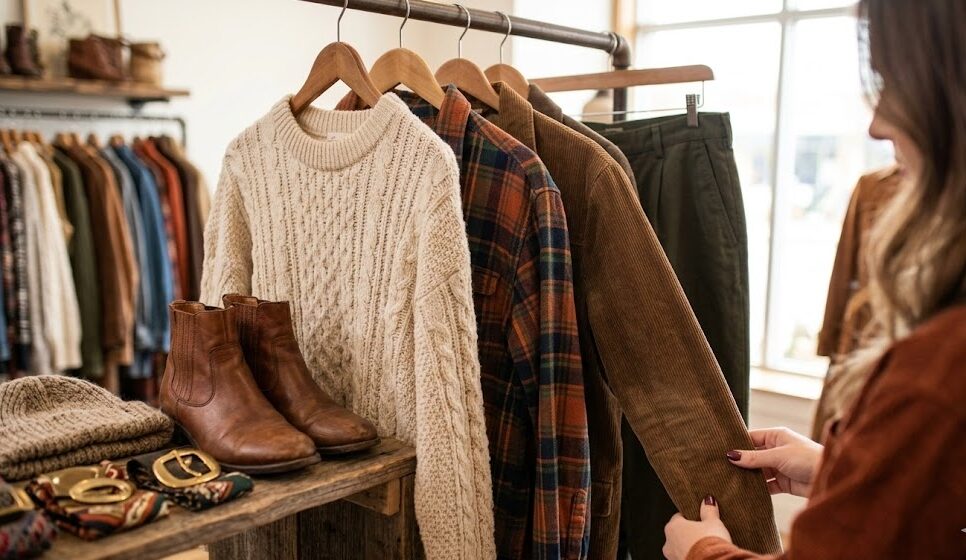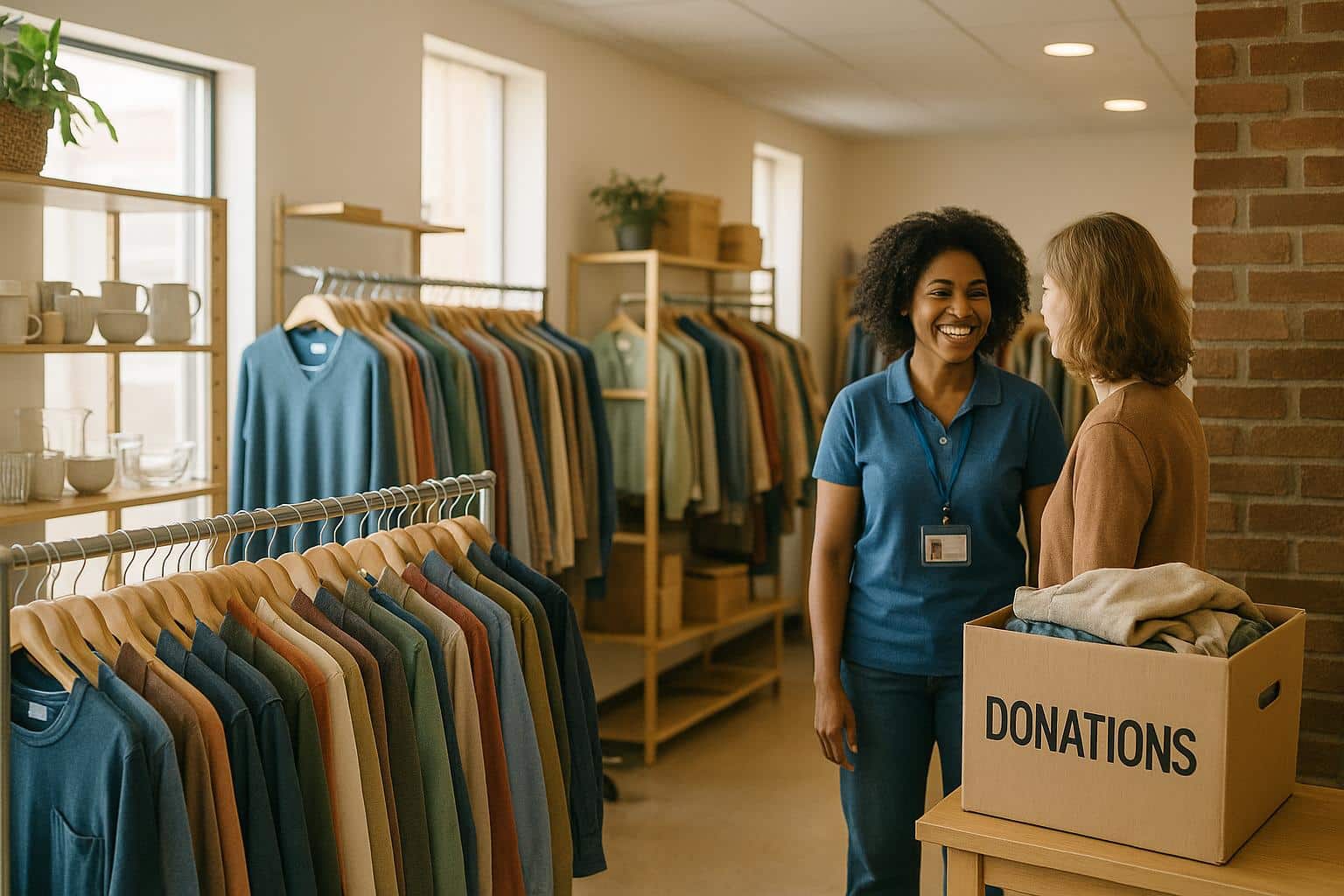
Thrift stores and nonprofits both aim to support communities, but they operate differently. Thrift stores sell donated goods at low prices, often reinvesting profits into community programs or causes. Nonprofits focus on addressing specific social issues, relying on monetary donations, grants, and fundraisers to provide free services or direct aid. Some nonprofits run thrift stores to generate steady income for their missions, blending these two models.
Key Takeaways:
- Thrift Stores: Collect and sell secondhand items, reduce waste, and make goods affordable. Some profits fund community initiatives.
- Nonprofits: Address social challenges through direct aid, funded by donations and grants. Often provide resources for free.
- Collaborations: Thrift stores and nonprofits often work together, sharing resources like donations and creating programs for greater community impact.
Quick Comparison
| Feature | Thrift Stores | Nonprofits |
|---|---|---|
| Primary Goal | Sell goods, fund causes, reduce waste | Provide free services, tackle social issues |
| Funding Sources | Sales revenue, donations | Donations, grants, fundraisers |
| Resource Distribution | Affordable goods, reinvest profits | Free aid and services to those in need |
| Tax Status | For-profit or nonprofit | Nonprofit, tax-exempt |
| Collaboration Example | Donation drives, voucher programs | Partnering with thrift stores for resource sharing |
Together, thrift stores and nonprofits create a stronger network to meet community needs.
How Thrift Stores Share Community Resources
Thrift stores operate as hubs for resource sharing, benefiting entire communities in multiple ways. By accepting donations from local residents, they turn these contributions into affordable goods for families, creating an ecosystem of reuse and accessibility. This approach not only helps families save money but also keeps usable items out of landfills, contributing to a cleaner environment. Let’s explore how thrift stores enhance affordability and promote sustainability.
Low-Cost Items for Local Families
Thrift stores make essential items accessible to people across all income levels. From clothing and furniture to household goods and toys, these stores offer deeply discounted prices, helping families stretch their budgets further.
“As a single mom with two kids, I’m barely scraping by, and school clothes shopping is a hardship. I couldn’t do it without my local Volunteers of America’s thrift store.” – Melissa, Columbus, OH
Some thrift stores go a step further by offering voucher programs, which allow families in crisis to shop for free. These programs provide a dignified shopping experience for those facing financial challenges, ensuring they can meet their needs without stigma.
Reducing Waste Through Reuse
Thrift stores also play a critical role in reducing waste by diverting items from landfills. With over 11 million tons of textile waste generated annually in the United States, and 85% of textiles ending up in landfills, secondhand shopping offers a practical way to cut down on waste. By encouraging people to buy pre-owned items, thrift stores reduce the demand for new products, lower carbon footprints, and conserve natural resources.
The environmental impact is significant, especially considering that the fashion industry alone contributes to 10% of global carbon emissions. While only about 25% of donated clothing is sold, the rest is often recycled, exported, or repurposed for industrial uses like insulation.
“Sustainability refers to practices that meet the needs of the present without compromising the ability of future generations to meet their own needs.” – Goodwill Middle of TN
This commitment to sustainability is further demonstrated by local initiatives like Red Racks Thrift Stores, which combine eco-friendly practices with community support.
Red Racks Thrift Stores: A Local Example
Red Racks Thrift Stores provide a shining example of how thrift stores can serve their communities. Operating since 1958, this veteran-owned organization runs 12 locations across Missouri and is managed by Disabled American Veterans (DAV). Their model creates a ripple effect of benefits: donors can declutter responsibly, shoppers find affordable goods, and veterans receive essential support services.
As a 501(c) organization, Red Racks reinvests its profits into programs that assist veterans, while also contributing to the local economy by creating jobs with growth opportunities. Unsold items are recycled responsibly, ensuring minimal waste and maximum impact.
“We serve the environment, our local community and Disabled American Veterans. Join us in making a difference.” – Red Racks Thrift Stores
This multi-faceted approach highlights how thrift stores can act as pillars of their communities, addressing a variety of needs. By supporting veterans, offering affordable goods, and promoting sustainability, Red Racks demonstrates the transformative potential of thrift store operations.
How Nonprofits Share Resources for Specific Needs
Nonprofits focus on tackling specific social challenges, using donations and grants to fund programs that address issues like homelessness, hunger, education, and healthcare. By narrowing their efforts, these organizations can develop expertise and create measurable results. This targeted approach is evident in their carefully crafted assistance programs and strategic funding plans.
Programs That Help People
Nonprofits design programs aimed at solving particular problems within communities. They identify service gaps – areas where government agencies or businesses may fall short – and step in with tailored solutions.
A big part of their efforts involves direct assistance programs that provide immediate help while connecting people to long-term support. For instance, food banks distribute meals to families in need, homeless shelters offer temporary housing and support services, and healthcare clinics extend medical care to uninsured individuals.
Beyond immediate relief, nonprofits also focus on empowerment through education and skill-building. Job training programs teach practical skills, financial literacy workshops help families manage their budgets, and mentorship programs pair young people with role models. For example, participants in Accion Opportunity Fund‘s small business programs have seen a 96% survival rate, far exceeding the national small business survival rate of 50%.
Nonprofits also address broader, systemic issues through community development projects. A great example is the Tony Elumelu Foundation‘s TEFConnect, a digital platform for entrepreneurs launched in 2018, which now supports 800,000 users and fosters cross-border opportunities. Similarly, the African Women’s Entrepreneurship Program has helped its alumni create over 17,000 jobs and establish 22 women’s business associations across Sub-Saharan Africa.
“Charitable nonprofits embody the best of America. They provide a way for people to work together for the common good, transforming shared beliefs and hopes into action.” – National Council of Nonprofits
The COVID-19 pandemic showcased nonprofits’ agility in adapting their services to meet new challenges, proving their ability to strengthen both formal and informal community support systems.
How Nonprofits Get Money and Donations
To fund their programs, nonprofits rely on diverse income streams, each with its own set of requirements and accountability standards.
Individual donations remain the largest source of nonprofit funding. In 2023, Americans gave $557.16 billion to charity, with individuals contributing $374.40 billion – or 67% of the total. These contributions range from small, recurring gifts to large, planned donations. Nonprofits often provide detailed reports to show donors the impact of their contributions.
Foundation grants are another critical funding source, representing 18.6% of total nonprofit giving, or $103.53 billion in 2023. Foundations usually fund specific projects that align with their missions, so nonprofits carefully allocate these funds to meet grant conditions.
Government funding provides stability but comes with rigorous administrative requirements. While this funding often covers only part of a program’s costs, it ensures ongoing support, provided nonprofits meet strict compliance standards.
Transparency is essential in managing these resources. Nonprofits that share clear financial statements and regular updates with their supporters build trust – 73% of people surveyed said trust is a top factor when deciding which charities to support. By combining these funding strategies, nonprofits can sustain impactful, goal-oriented programs.
How Thrift Stores and Nonprofits Work Together
When thrift stores and nonprofits join forces, they create a dynamic partnership that benefits entire communities. Together, they combine resources, skills, and expertise to address challenges that might be too big to tackle alone. Let’s take a closer look at how these collaborations make a difference.
Working Together for Greater Impact
The partnership between thrift stores and nonprofits strengthens community support systems in a variety of ways. From organizing donation drives to running programs that address specific needs, these collaborations allow both organizations to expand their reach. For instance, many nonprofits receive offers of used clothing and household items, but often lack the space or infrastructure to manage and distribute these donations. Thrift stores step in as natural allies, providing the necessary logistics to make it all work.
Take America’s Thrift Stores as an example. Since its founding in 1984, it has partnered with six charities across five states, helping collect donations, resell items, and fund its partners. This collaboration has created over 1,500 jobs and aims to contribute $100 million to its charity partners over a decade. The model allows nonprofits to remain independent while benefiting from a steady flow of resources and financial support.
Voucher programs are another way these partnerships make an impact. ACTS Thrift Store in Pasadena works with Door of Hope to exchange redirected donations for vouchers, which families can use to get free clothing and household items. Similarly, in Nashville, churches collaborate with ThriftSmart by encouraging their members to donate items, volunteer, or host shopping events. ThriftSmart, in turn, supports these efforts by providing vouchers to those in need.
The environmental benefits of these collaborations are also worth noting. For example, America’s Thrift Stores diverts over 45 million pounds of goods from landfills each year, showing how these partnerships contribute to sustainability.
Nonprofits That Run Thrift Stores
Some nonprofits take a more hands-on approach by operating their own thrift stores. This gives them direct control over donations, a reliable income stream, and a sustainable funding model that reduces reliance on grants or individual donations.
One standout example is the Community Thrift Store in the San Francisco Bay Area. Since 1982, it has partnered with more than 200 charitable organizations, supporting causes such as environmental preservation and women’s empowerment. By accepting and selling donations on behalf of its partners, the store distributed over $420,000 to charity organizations in 2018.
Another example is the Community Services League, which teamed up with Thrift World to place donation bins in the community. Thrift World compensated the league for the collected donations, helping fund programs that provided $1,230,457 worth of food and clothing and $491,812 in rent or mortgage assistance in 2018. This approach not only generates revenue but also supports broader community initiatives.
“We believe in the charity partners we serve and making a difference in the communities we live in.” – America’s Thrift Stores
Red Racks Thrift Stores in Missouri showcases a similar model. As a veteran-owned organization, it operates shops that support Disabled American Veterans while also serving the local community. Their efforts create affordable shopping opportunities, provide jobs with growth potential, and generate funds for specific causes.
The key to successful partnerships lies in clear communication and shared goals. When thrift stores and nonprofits align their missions and maintain consistent collaboration, they can coordinate donation drives, share volunteer resources, and create programs that serve the community more effectively than they could individually.
Thrift Stores vs. Nonprofits: Side-by-Side Comparison
Thrift stores and nonprofits approach funding, inventory, and community impact in distinct ways. While both contribute positively to their communities, they do so through different models and goals.
The primary distinction lies in their purpose. For-profit thrift stores function like traditional retail businesses, focusing on buying and selling inventory to generate profits for growth. Nonprofit thrift stores, on the other hand, are mission-driven, using their revenue to fund charitable initiatives like housing support, job training, or food assistance. Understanding these differences helps clarify their respective roles and combined impact.
Comparison Chart
Here’s a breakdown of how thrift stores and nonprofit thrift stores manage their resources:
| Feature | For-Profit Thrift Stores | Nonprofit Thrift Stores |
|---|---|---|
| Primary Goal | Generate profits for business growth | Support charitable missions and programs |
| Funding Sources | Sales revenue, potential investors | Donations, grants, and sales revenue |
| Resource Acquisition | Purchase inventory from suppliers | Rely on donated goods from the community |
| Resource Distribution | Reinvest profits into business expansion | Channel revenue directly to charitable work |
| Tax Status | Pay full taxes on profits | Qualify for tax exemptions |
| Community Perception | May face image challenges | Attract mission-driven shoppers |
| Startup Costs | $20,000 to $150,000 | $20,000 to $150,000 |
| Volunteer Support | Limited volunteer involvement | Heavy reliance on community volunteers |
This comparison highlights the different funding and operational strategies of each model. For-profit thrift stores rely on sales revenue and investor funding, while nonprofit stores depend on donations, grants, and sales to sustain their charitable missions.
Nonprofit thrift stores also benefit from donated goods, which allows them to offer lower prices and further their community initiatives. In contrast, for-profit stores purchase inventory from suppliers, focusing on profitability.
Another key difference lies in how success is measured. For-profit thrift stores evaluate performance through business metrics like profit margins and sales growth. Nonprofit thrift stores, however, focus on community impact, tracking factors such as jobs created, volunteer contributions, materials diverted from landfills, and the number of people served by their programs.
For example, Triangle ReStores demonstrated the power of creative fundraising by raising $200,000 in a year through an automated roundup feature that encouraged customers to round up their purchases to the nearest dollar.
Both types of thrift stores contribute to addressing waste and sustainability issues. In the U.S., individuals discard between 60 and 80 pounds of textile waste annually, and 75% of Gen Z shoppers prioritize sustainability over brand loyalty. This growing awareness creates opportunities for thrift stores – whether for-profit or nonprofit – to meet these demands while promoting environmental responsibility.
It’s worth noting that nonprofits operate under regulations requiring proceeds to support their missions, a key distinction from for-profit stores.
“SMCo Thrift Store Consultants exists to help thrift stores fund the work and grow the brand of the nonprofit initiatives they support.”
These differences illustrate how both models collaborate to share resources and strengthen community efforts.
Why Thrift Stores and Nonprofits Should Work Together
When thrift stores and nonprofits join forces, they create partnerships that strengthen community support and address a range of needs. Together, they can increase donations, boost visibility, and foster engagement, all while working toward shared goals.
Take Nashville, for example. ThriftSmart collaborates with local churches to encourage donations, organize volunteer efforts, and host shopping events. They even provide vouchers to help community members in need.
These partnerships can also take creative forms. Picture a thrift store teaming up with a food bank for a “Give & Get” program. Shoppers who donate canned goods receive discounts, keeping resources circulating within the community and deepening connections between organizations.
Revenue from thrift stores plays a critical role as well. Nonprofits that run thrift stores often reinvest that income directly into their programs. Lisa Rusyniak, CEO of Goodwill Industries of the Chesapeake, highlights this impact:
“The revenue we generate through our thrift stores enables us to assist more than 7,000 individuals annually, and place about 1,000 people into jobs, providing them with a chance for a brighter future. That’s a huge impact.”
Consumers also support this mission-driven approach. Research shows that 55% of shoppers are willing to pay more for products from businesses that partner with nonprofits. This preference helps thrift stores attract customers who value purpose-driven shopping.
Red Racks Thrift Stores is a great example. They support Disabled American Veterans while offering affordable shopping and career opportunities in Missouri communities.
Practical collaborations like donation drives, in-kind contributions, and referral systems further strengthen these partnerships. Nonprofits can build even deeper connections through volunteer days, shopping events, and donation campaigns. These efforts not only share resources but also build lasting relationships, proving that working together can maximize local support and make a real difference.
FAQs
How do thrift stores and nonprofits work together to support communities?
Thrift stores and nonprofits work hand-in-hand to uplift communities by pooling resources and backing local programs. The revenue generated by thrift stores often plays a key role in funding nonprofit initiatives such as housing support, job training, and educational programs.
These collaborations also champion sustainability by giving new life to donated items, cutting down on waste, and providing budget-friendly shopping options for families. By working together, thrift stores and nonprofits make a meaningful difference, addressing community needs and encouraging local support.
How do thrift stores contribute to sustainability and reduce waste?
Thrift stores are a powerful ally in reducing waste by giving clothes, toys, and other items a second chance. Instead of ending up in a landfill, these goods find new homes, which helps save resources like water, energy, and raw materials that would otherwise go into making new products.
By encouraging reuse and recycling, thrift stores contribute to a circular economy – an approach that aims to cut down on environmental harm. Shopping secondhand doesn’t just reduce the need for new production; it also helps lower the carbon footprint of industries like textiles. It’s a simple, eco-conscious way to shop while also benefiting your local community.
Why do some nonprofits run thrift stores instead of relying only on donations and grants?
Nonprofits frequently run thrift stores as a way to generate steady income to support their programs, like community outreach, job training, or services for veterans. This model helps lessen their dependence on uncertain donations or grants, giving them a more reliable way to sustain their efforts over time.
Thrift stores also offer nonprofits a chance to accept donated goods, provide budget-friendly shopping options, and even recycle items that don’t sell, all while benefiting the community. By managing these stores, nonprofits not only secure more control over their funding but also advance their mission in a hands-on, meaningful way.