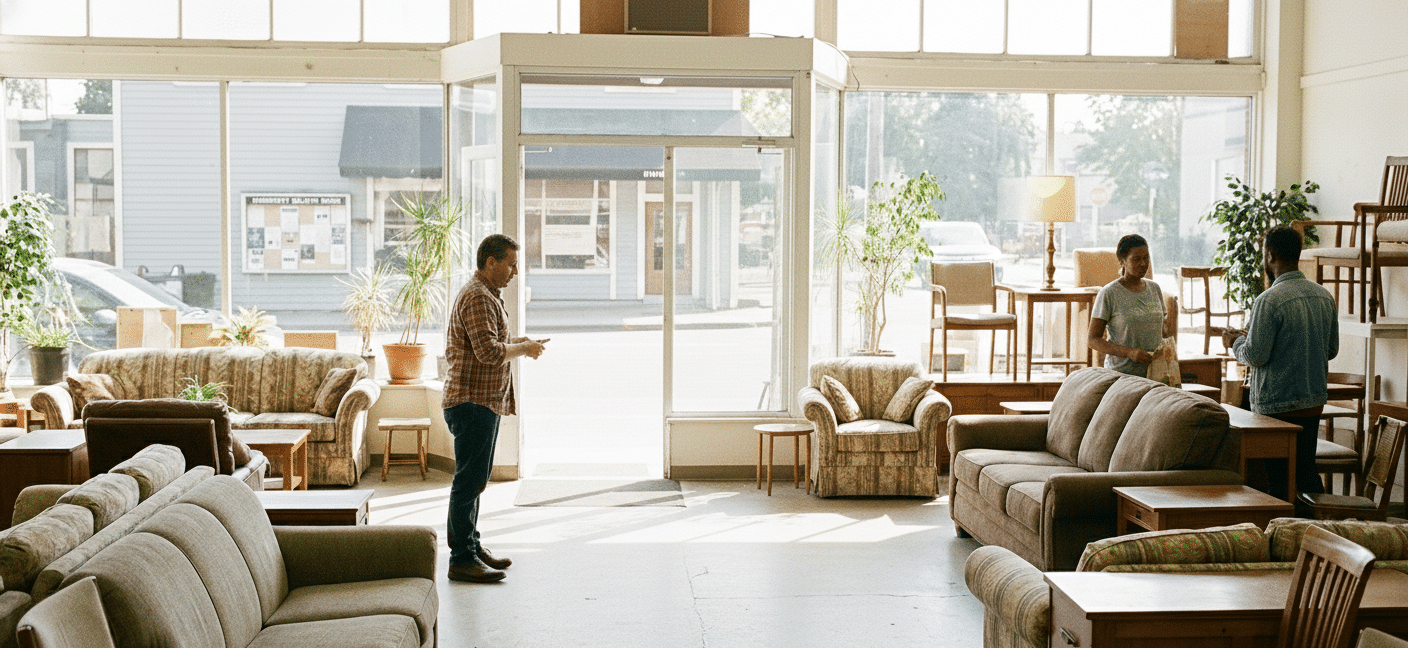
Thrifting furniture isn’t just a way to save money – it’s a choice that supports your community and reduces waste. By buying secondhand, you help keep furniture out of landfills, conserve resources, and support local businesses and charities. Here’s why it matters:
- Environmental Impact: Over 9 million tons of furniture end up in U.S. landfills annually. Buying used reduces waste and limits the demand for new materials like wood and plastic.
- Economic Benefits: Thrift stores generate jobs and provide affordable options for families, with some households saving up to $1,800 a year.
- Community Support: Many thrift stores, like Red Racks in Missouri, reinvest profits into local causes, such as aiding veterans.
Shopping secondhand goes beyond furnishing your home – it strengthens local connections, reduces waste, and supports meaningful causes.
How Buying Used Furniture Helps the Environment
Opting for used furniture does more than save you money – it plays a role in protecting the planet. From minimizing waste to conserving natural resources, choosing secondhand items supports a more sustainable lifestyle. Let’s break down how buying used furniture makes a difference.
Keeping Furniture Out of Landfills
Furniture waste is a massive issue in the United States, with over 9 million tons ending up in landfills every year. When you buy a secondhand couch, dining table, or bookshelf, you’re helping to reduce this staggering amount. Instead of contributing to landfill overflow, you’re giving these items a second life and keeping them in use.
Conserving Resources and Cutting Pollution
Creating new furniture requires a lot of raw materials – wood, metals, and plastics – which are often sourced through processes that harm the environment, like deforestation and mining. By choosing pre-owned furniture, you reduce the demand for these materials and avoid the energy-heavy manufacturing processes that contribute to pollution. Plus, used furniture has already released most of its volatile organic compounds (VOCs), making it a better choice for your indoor air quality.
Encouraging Upcycling and Creative Solutions
Buying secondhand opens the door to creativity. Vintage and antique furniture often boasts superior craftsmanship and durable materials compared to many modern, mass-produced pieces. These qualities make them perfect for upcycling projects – a little paint or refinishing can turn an old table into a stunning focal point for your home. Thrift stores like Red Racks Thrift Stores are great examples of this sustainable cycle, as they recycle unsold items instead of discarding them. With the rise of online marketplaces and the growing interest in eco-friendly living, it’s easier than ever to find quality secondhand furniture and contribute to a greener future.
How Thrift Stores Help Local Communities
Thrift stores are more than just places to find affordable furniture – they play an important role in strengthening local economies, supporting charities, and promoting recycling.
Creating Jobs and Supporting Charitable Programs
Thrift stores create meaningful job opportunities while giving back to their communities. Take Red Racks Thrift Stores, for example. Since 1958, this veteran-owned organization has operated 12 locations across Missouri, offering jobs with benefits and growth opportunities. Every purchase supports Disabled American Veterans, blending economic impact with a charitable mission.
The numbers back this up. In 2020, thrift stores in the U.S. generated over $17 billion in revenue, showcasing the economic power of secondhand retailing.
Affordable Furniture for Families on a Budget
For families looking to stretch their dollars, thrift stores are a lifeline. They provide access to quality furniture at prices that don’t break the bank. In fact, shopping secondhand can save families up to $1,800 a year. That’s money that can go toward essentials like healthcare, education, or emergency expenses.
“We’ve been providing great prices and quality items to savvy shoppers since 1958.” – Red Racks Thrift Stores
On average, a U.S. thrift store generates about $300,000 annually in revenue. Much of this money stays local, fueling wages, charitable contributions, and community programs. These savings not only help individual households but also create ripple effects that benefit the entire community.
Strengthening Community Bonds and Reducing Waste
Thrift stores do more than boost the economy – they also build stronger communities and help the environment. For example, Red Racks Thrift Stores recycle unsold items rather than sending them to landfills. This approach supports sustainability while reducing local waste management costs.
Beyond their environmental efforts, thrift stores serve as community hubs. They offer spaces for people to volunteer, donate, and connect over shared goals like sustainability and mutual support. By doing so, thrift stores create a sense of community while addressing practical needs.
Building Community Connections Through Thrift Shopping
Thrift shopping does more than just promote sustainable living – it brings people together, creating stronger, more connected communities. When neighbors rally around shared values like reducing waste and helping others, genuine relationships naturally take root.
Getting People Involved Locally
Donation drives are a fantastic way to unite communities. These events encourage residents to donate items they no longer need, fostering a sense of shared purpose and responsibility. They’re not just about giving away old belongings – they’re about coming together for a common cause.
Red Racks Thrift Stores takes this concept a step further by linking local donations and volunteerism with meaningful support for Disabled American Veterans. Their programs connect individual efforts with tangible charitable outcomes, offering a clear way for people to see the impact of their actions.
Volunteering is another powerful way to strengthen community ties. Whether it’s sorting donations, helping customers, or organizing events, these activities bring people together to work toward common goals. Along the way, volunteers develop teamwork skills and a sense of belonging, building a stronger community in the process.
These local efforts often ripple outward, inspiring a broader commitment to reuse and sustainability.
Promoting a Culture of Reuse
Beyond its environmental and economic benefits, thrift shopping reinforces shared values across communities. Choosing secondhand items over new ones reflects care for the environment and a resourceful mindset. This behavior not only normalizes reuse but also celebrates creative and sustainable living.
The environmental benefits of thrift shopping are undeniable. Buying secondhand reduces carbon emissions by an average of 25%, and thrift stores keep over 95% of donated items out of landfills. Considering the U.S. produces 16 million tons of textile waste annually, these efforts make a huge difference by diverting millions of tons of usable goods from landfills.
Red Racks Thrift Stores exemplifies this commitment to sustainability by recycling unsold items rather than discarding them. This practice not only aligns with environmental goals but also demonstrates to customers and the community that we all share a responsibility to reduce waste.
The rise of thrift shopping is part of a larger cultural shift. With 16–18% of Americans participating in thrifting each year, more people are embracing the benefits of secondhand goods. By reinvesting in local programs and supporting initiatives for Disabled American Veterans, Red Racks Thrift Stores shows how every donation and purchase can help strengthen community bonds while making a positive impact.
Tips for Shopping for Used Furniture
Shopping for used furniture is not just about finding great deals – it’s also a way to add character to your home, support your community, and reduce waste. Unlike buying new, hunting for secondhand pieces takes a bit of strategy. But with some know-how, you can uncover high-quality, one-of-a-kind items that elevate your space.
Finding Quality and Unique Pieces
Make frequent visits to thrift stores. Inventory changes quickly, and the best items often sell fast. Weekday mornings are ideal for beating the weekend rush and snagging fresh arrivals.
Focus on solid wood furniture. Look for details like dovetail joints, sturdy hardware, and heavy frames. These features signal durability, even if the piece needs a little TLC.
Check the hidden corners of stores. While most shoppers stick to the main displays, treasures often hide in the back or less obvious sections. Don’t hesitate to ask store staff about new arrivals or upcoming inventory – they often have the inside scoop.
For those in Missouri, Red Racks Thrift Stores is an excellent option. As a veteran-owned business, it offers a curated selection while supporting Disabled American Veterans.
Be prepared. Bring along a tape measure, flashlight, and photos of your space to ensure you’re making the right choice for your home.
Once you spot a potential gem, take the time to inspect it thoroughly before committing.
Checking Furniture Condition and Making Repairs
Always test furniture before buying. Check for stability, make sure drawers open smoothly, and inspect surfaces for hidden damage.
Watch for odors or signs of pests. Mold, mildew, or persistent smells in upholstered furniture can indicate deeper issues. Inspect seams and crevices for signs of infestations, especially in fabric-covered items.
Don’t shy away from minor repairs. Tightening screws, gluing joints, or replacing hardware can restore a piece’s functionality and value.
Refinishing can work wonders. A worn-out wooden table can look brand new with sanding and a fresh coat of paint or stain. Upholstered items can be updated with slipcovers or reupholstered for a cleaner, more modern vibe.
If you’re new to DIY, local workshops and online tutorials can guide you through the process, making even complex projects manageable.
Once your furniture is ready, it’s time to think about how it fits into your home.
Adding Used Furniture to Your Home Decor
Mix old and new for an eclectic style. A mid-century modern dresser can look stunning alongside contemporary bedding, while an antique dining table adds warmth and character to a minimalist space.
Customize to suit your style. A dated bookshelf can become a bold statement piece with a fresh coat of paint and updated hardware.
Get creative with repurposing. A vintage trunk can double as a coffee table with hidden storage, or an old ladder can be transformed into a quirky bookshelf.
Use textiles to tie it all together. Throws, cushions, and table runners can help blend different furniture styles while adding comfort and visual interest.
The secondhand furniture market was valued at $38.32 billion in 2023. With prices often 50–80% lower than new retail, shopping secondhand allows you to experiment with bold, unique pieces that might otherwise be out of reach.
Plan. Take measurements and photos of your space before heading out. This ensures your finds will fit and complement your home perfectly.
The Long-Term Impact of Buying Used Furniture
Opting for used furniture instead of new doesn’t just benefit your wallet – it creates a ripple effect that extends far beyond your home. Every secondhand purchase reduces landfill waste and supports a shift toward more mindful consumption.
The impact goes beyond environmental benefits. The secondhand market is growing at an impressive rate, projected to expand nine times faster than the overall retail sector by 2027. This shift isn’t just about sustainability – it’s about revitalizing local economies. By supporting thrift stores and resale markets, you’re contributing to job creation and keeping money within your community instead of sending it to large corporations.
Take Red Racks Thrift Stores as an example. Since 1958, this veteran-owned organization has been making a difference in Missouri. With 12 locations, they not only offer affordable furniture but also directly support Disabled American Veterans. Their efforts show how thrift stores can create a positive cycle: they promote environmental responsibility while uplifting communities through charitable initiatives.
The environmental impact of buying used furniture grows exponentially over time. By extending the lifespan of items, millions of transactions collectively reduce resource consumption and waste, helping to build a circular economy where goods are reused rather than discarded.
But the benefits don’t stop there. Thrift shopping fosters a culture of sharing and intentional consumption, strengthening community ties. Supporting local thrift stores means backing job creation, charitable programs, and green initiatives that benefit everyone. The furniture you bring into your home becomes part of a larger, meaningful story – one where your choices contribute to stronger, more connected, and sustainable communities for generations to come.
FAQs
How does buying thrifted furniture help reduce waste and protect natural resources?
Buying thrifted furniture is a simple way to cut down on waste while giving used items a second life. Instead of ending up in landfills, these pre-loved pieces can find a new home. Plus, it helps conserve resources like wood, metal, and fabric by reducing the need for new furniture production. Shopping at stores such as Red Racks Thrift Stores doesn’t just promote eco-friendly habits – it also supports your local community by offering affordable options and encouraging recycling.
How does buying secondhand furniture benefit families and local communities?
Purchasing secondhand furniture can be a smart move for both your wallet and your community. It’s an affordable way to furnish your home without breaking the bank, while also supporting local thrift stores that often reinvest in the community.
Take Red Racks Thrift Stores, for example. They provide quality furniture at reasonable prices, recycle unsold items to minimize waste, and back meaningful causes like Disabled American Veterans. By opting for secondhand, you’re not just saving money – you’re also helping to create a more sustainable and community-focused environment.
What should I look for when checking the quality of used furniture before buying?
Before making a decision, take a close look at the furniture for any noticeable issues like scratches, stains, or missing parts. Pay attention to the joints – make sure they’re solid and not wobbly by applying light pressure to test the stability. For upholstered pieces, check for tears, unpleasant odors, or heavy wear. If you can, inspect the furniture in person to confirm it aligns with your expectations. Feel free to ask about its background, including any past repairs or upkeep, so you can make a well-informed choice.